
Tunisian mesh is a textured, open fabric built from rows of raised loops that lock together into a honeycomb-like grid, and it feels as satisfying to work as it looks on the hook.
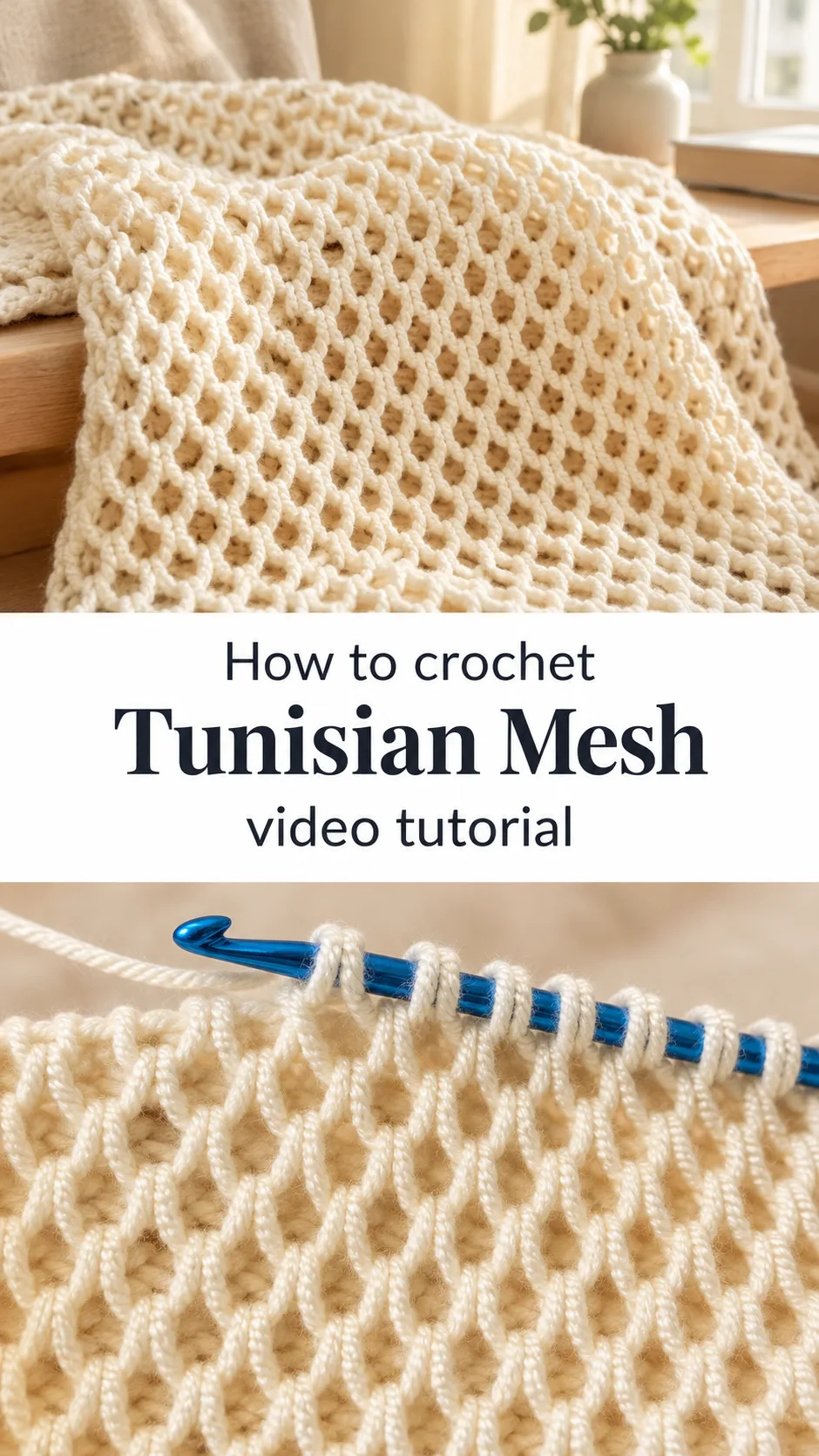
The Crochet Tunisian Mesh
Crochet Tunisian mesh is a fabric that looks far more intricate than it is. Its surface is covered in small, rounded openings that stack into a diagonal, lattice-like pattern, with the creamy tone of the yarn giving every cell a soft, sculpted shadow. Where many lace stitches feel delicate and fragile, this one reads as sturdy and tactile, with a firm structure that holds its shape while still letting air and light through. The stitch is worked with a Tunisian hook, so the loops are picked up and then drawn off in pairs, leaving a neat row of vertical bars behind each step. The result is a fabric that suits a wide range of projects, from wraps and light tops to bags and blankets, and it gives the maker a rhythm that quickly becomes familiar. It is a stitch that rewards patience, and the more rows you work, the more the pattern seems to emerge from the fabric itself.
Tunisian Mesh Related Posts:
- Crochet Towel Topper: A Charming Kitchen Essential
- Crochet Butterfly Puff Square: A Charming Textured Delight
- Crochet Bubble Flower Charm: A Cheerful Handmade Accent
- Crochet Bubble Stitch Blanket: A Bold Textured Treasure
Why Work a Tunisian Mesh Project?
Practical makers often choose this stitch because it combines an open, breathable look with real durability. The mesh uses less yarn than a solid stitch of the same size, so a project can feel generous without becoming heavy. It also works up relatively quickly once the rhythm settles, and the repeating pattern makes it easy to keep track of where you are. For anyone who wants to build confidence with Tunisian techniques, it offers a gentle but meaningful challenge that teaches tension control and the importance of consistent loop height.
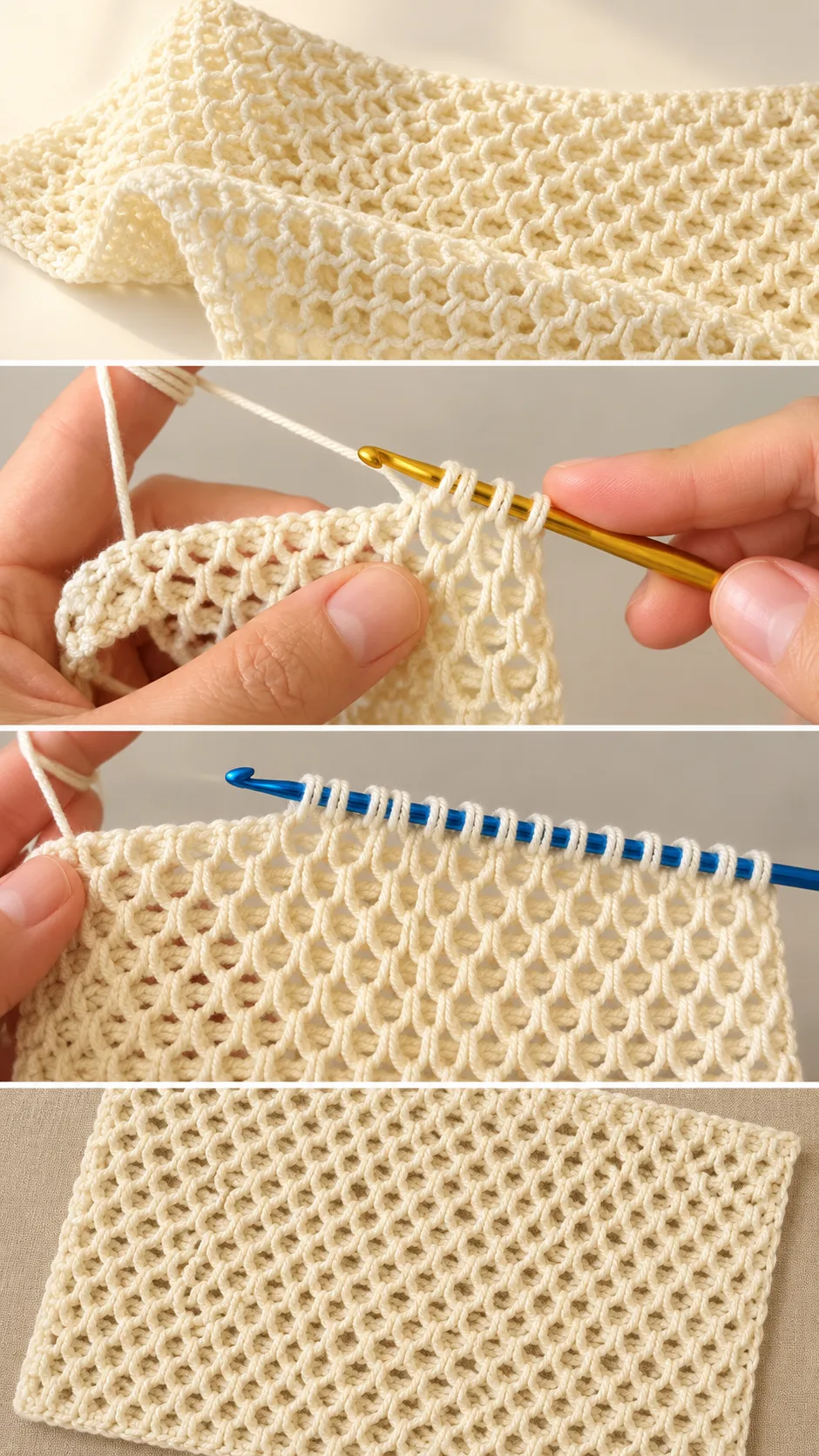
Materials
To work this mesh, you will need a worsted-weight cotton or cotton-blend yarn in a cream or off-white shade, along with a Tunisian hook sized to the yarn label and a pair of sharp scissors for finishing. A tapestry needle is useful for weaving in ends and sewing seams. Cotton and cotton blends hold the defined loops and keep the openings crisp, while a fuzzy or stretchy fibre tends to blur the pattern and make the cells harder to read. Choosing a smooth, plied yarn helps the stitch show its structure clearly, and a hook that is comfortable in your hand will make long rows far more enjoyable. Keep a stitch marker nearby to flag the beginning of each row when the pattern repeats.
Understanding the Mesh Structure
The mesh is built from vertical bars that alternate with open spaces, and each repeat creates a small diamond-shaped opening. The openings line up on a slant, which is what gives the fabric its honeycomb character. Because the loops are picked up through the same spots row after row, the pattern is self-reinforcing, and the fabric holds its shape without much help. Watching how the loops stack in the video will make the structure click faster than any written description.
Choosing Yarn and Colour
Cream and ivory are classic choices, because the stitch shows shadow and depth best against a light base. A soft cotton in oatmeal or natural undyed tones keeps the piece understated and warm. If you prefer more contrast, a pale sage or dusty blue will let the openings stand out while keeping the overall feel gentle. Avoid very dark or heavily variegated yarns, which tend to swallow the openings and hide the pattern you worked hard to build.
Skill Level and What Takes Patience
This stitch sits comfortably in the intermediate range. The basic movements are simple, but keeping the loops even across a row takes practice. The part that tests patience is the rhythm of the return pass, where you must work off the loops in the correct order while keeping the fabric from pulling in. Take it slowly for the first few rows, and you will find the motion settles into something almost meditative.
How to Keep the Edges Straight
If the sides begin to pull inward, your loops are likely too tight at the edge. Work the first and last stitch of each row a little looser, and make sure you are picking up the full loop each time. If the fabric ripples, check that your tension is consistent between the forward and return passes, since uneven tension is the most common cause of waviness.
Tips for a Smooth Finish
Block the finished piece gently with light steam or a damp towel to open the mesh and even out the loops. Weave in ends carefully along the back so they do not show through the openings. If you are joining pieces, a whipstitch in matching yarn keeps seams flat and nearly invisible.
How to Style a Tunisian Mesh Piece
A cream mesh works beautifully as a light layer over a simple slip dress or a plain tank, letting the fabric’s texture show without overwhelming the outfit. It also pairs well with denim and linen for a relaxed daytime look, or as an accent over a neutral knit for cooler days. Used as a home textile, the open pattern adds softness to a sunlit corner without blocking the light.
Caring for Your Mesh
Hand wash in lukewarm water with a mild detergent, then press out excess water in a towel without wringing, which can distort the openings. Lay the piece flat to dry, reshaping it gently. Store it folded rather than hung, so the loops keep their shape over time.
Following the Video Tutorial
Watch the tutorial closely for the hand position on the return pass, since that is where the stitch takes its character. Pause whenever you need to, and replay the sections that show how the loops are picked up. Work a small test swatch first, so you can check your tension before committing to a full project.
A Textured Handmade Classic
Crochet Tunisian mesh is a fabric that rewards attention and repays it with an open, sculptural surface. Choose a smooth cotton, keep your tension even, and let the pattern build row by row. Those three choices decide whether the finished piece feels crisp and lovely or loose and uneven.
Video tutorial by Ayşenin Örgü Modelleri: https://www.youtube.com/
Follow us on Pinterest and subscribe to the Newsletter so you don’t miss a thing!
Tutorial and photos of this tunisian mesh by: AYŞENİN ÖRGÜLERİ.