
A lavender granny square is a small, cheerful motif built from bands of soft purple and creamy white, a project that rewards both the eye and the hook.
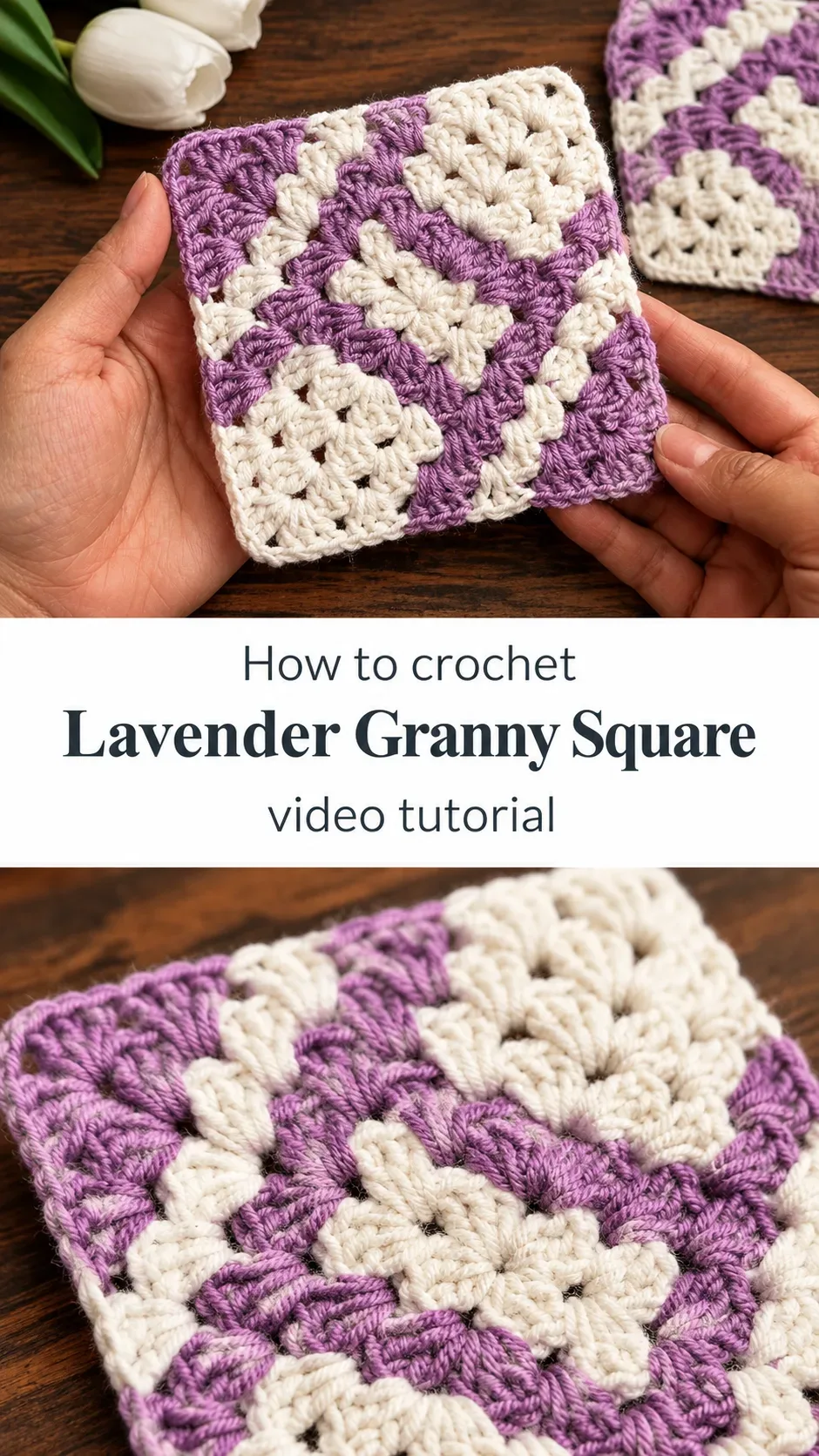
The Crochet Lavender Granny Square
The crochet lavender granny square is a patchwork motif that looks far more complicated than it is. Its soft purple rounds sit alongside clean white clusters, and the pattern of colour creates a zigzag, almost woven feel across the surface. Unlike a plain single-colour square, this one carries a sense of movement: the lavender bands seem to step inward and outward around the white centres. It is a piece built for gathering into a blanket, a cushion cover or a table runner, and it is equally pleasant to make as a single square on a quiet afternoon.
Consider the square as a building block first. Each motif is a complete unit, so you can make one, ten or a hundred, and join them in whatever layout suits your space. Its clear two-colour contrast makes it easy to see where each round begins and ends, which helps a beginner keep track of the work.
Granny Square Related Posts:
- Crochet Flower Hair Accessories: A Charming Handmade Duo
- Crochet Ribbed Pompom Beanie: A Warm Winter Classic
- Crochet Chunky Bean Stitch Hat: A Warm Winter Essential
- Crochet Lace Panel: A Delicate and Timeless Classic
Materials
For this square, a medium-weight cotton or cotton-blend yarn is a sensible choice. Cotton keeps the stitches crisp, so the white clusters stay bright and the lavender bands keep their definition instead of blurring together. Acrylic also works well and is forgiving if you are still building confidence, though it tends to look a little softer and less sharp at the edges. Pick a hook that suits the yarn label and check your square against the size you want; if the motif comes out too loose and floppy, switch to a smaller hook, and if it feels stiff and cupped, go up a size. You will need a tapestry needle for weaving in the ends, and a pair of scissors. Two colours are enough, one lavender and one off-white, so buy enough of each to finish the square with a comfortable margin.
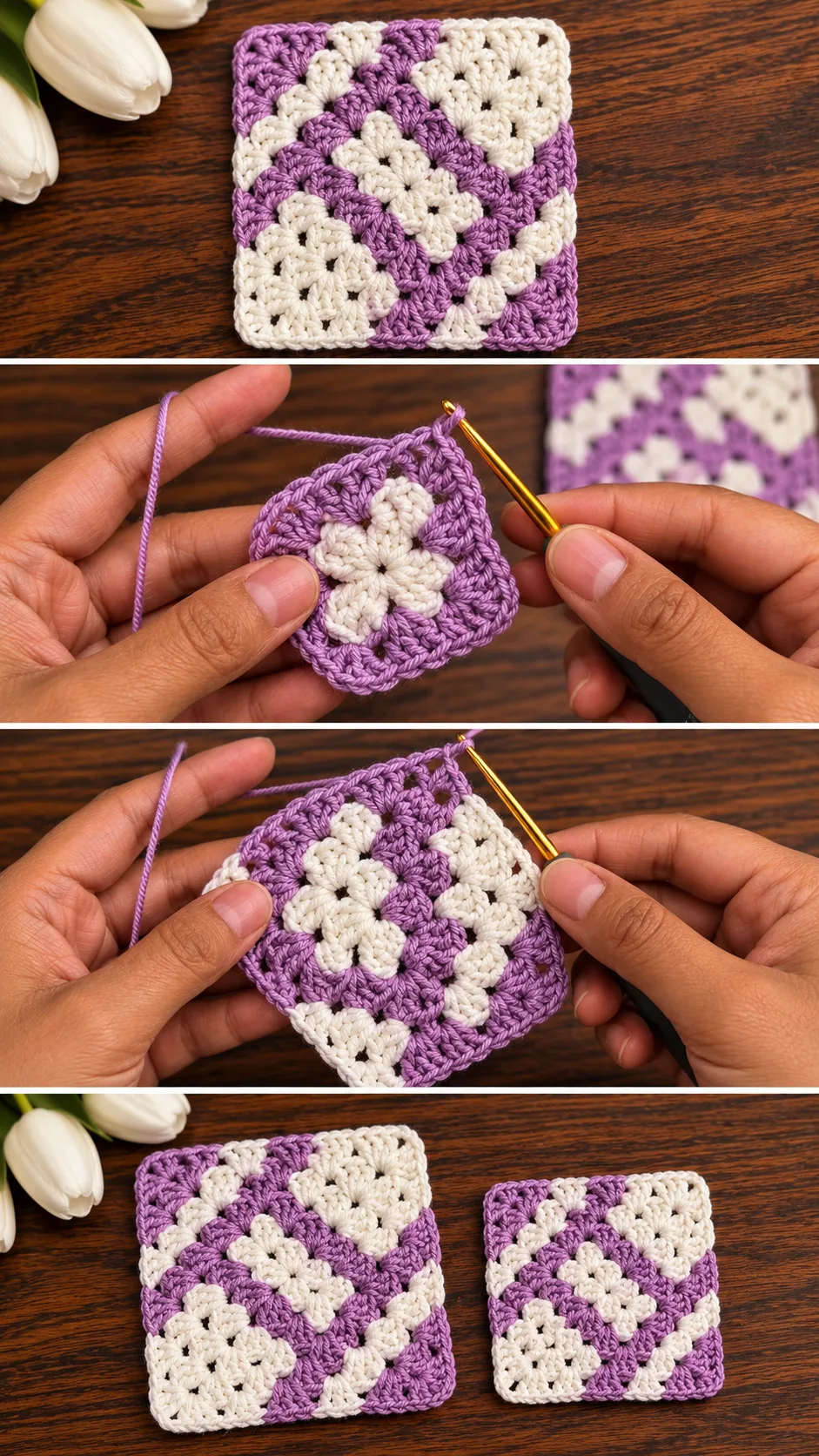
How the Square Is Built
The square grows outward from a small centre, round by round. Each round adds a new layer of colour, with the white clusters and lavender spaces arranged so that the corners of the square stay neat. The work happens in a clear rhythm: join your colour, work the round, change colour when the pattern asks, and repeat. Because every round is a full circuit of the square, you can check your progress easily by counting how many bands of each colour you have completed.
The hardest part is usually keeping the corners tidy. Corners need slightly more stitches than the sides, and it is easy to lose count when you are switching colours. If your corners start to pull inward, check that you are placing the extra stitches at each corner point rather than along the straight edges.
If the Corners Pull In
If the corners look shallow or the square curls, the cause is usually that the corner groups are being worked too tightly. Loosen your tension slightly at the corners and make sure each corner group is fully completed before moving to the next side.
Choosing Colours for a Lavender Square
The lavender and white combination is soft and calming, but it is not the only option. A deeper plum with cream creates a richer, more formal look that suits cushions. A pale lilac with bright white feels fresh and summery, while a lavender with a warm oatmeal produces a cosier, more rustic result. Avoid pairing the lavender with a colour of similar tone, because the rounds will merge and the zigzag pattern will disappear. Strong contrast between the two shades is what makes this square stand out.
Joining and Finishing Your Squares
When you have several squares ready, join them with a neat whipstitch through the back loops, keeping the colour bands aligned across each seam. Matching the bands is what makes the finished piece look deliberate rather than random. Weave in every yarn end carefully, running it through the stitches on the wrong side so it stays hidden. Blocking each square lightly with steam before joining will help it lie flat and keep the corners square.
If the Squares Will Not Line Up
If your joined squares look wavy, the most likely cause is uneven tension between squares. Block them all to the same measurement before joining, and use a steady tension when you stitch the seams.
Caring for Your Lavender Granny Squares
Cotton squares can be hand washed in lukewarm water with a mild detergent, then gently pressed in a towel to remove excess water. Lay them flat to dry so the shape holds. Acrylic squares can usually be machine washed on a gentle cycle inside a mesh bag, though hand washing will keep the colours bright for longer. Avoid wringing the squares, since that stretches the stitches and distorts the motif.
Following the Video Tutorial
The video that accompanies this article shows the stitches in action, and it is worth watching it all the way through once before you pick up your hook. Pay close attention to how the colour changes are made at the start of each round, because that is where many beginners stumble. Pause the video whenever you need to, and replay the corner sections, since watching how the hook enters each corner group is often the quickest way to get the shape right.
A Timeless Handmade Charm
The lavender granny square is a small project with a big impact. Its contrasting bands, simple rhythm and endless layout possibilities make it a good companion for a long crochet journey. Choose your yarn with care, keep the corners neat and block your squares before joining, and the result will be a piece you return to again and again.
Video tutorial by Knitting time. Watch the full lesson here:
Follow us on Pinterest and subscribe to the Newsletter so you don’t miss a thing!
Tutorial and photos of this lavender granny square by: Knitting time🧶by Dina.