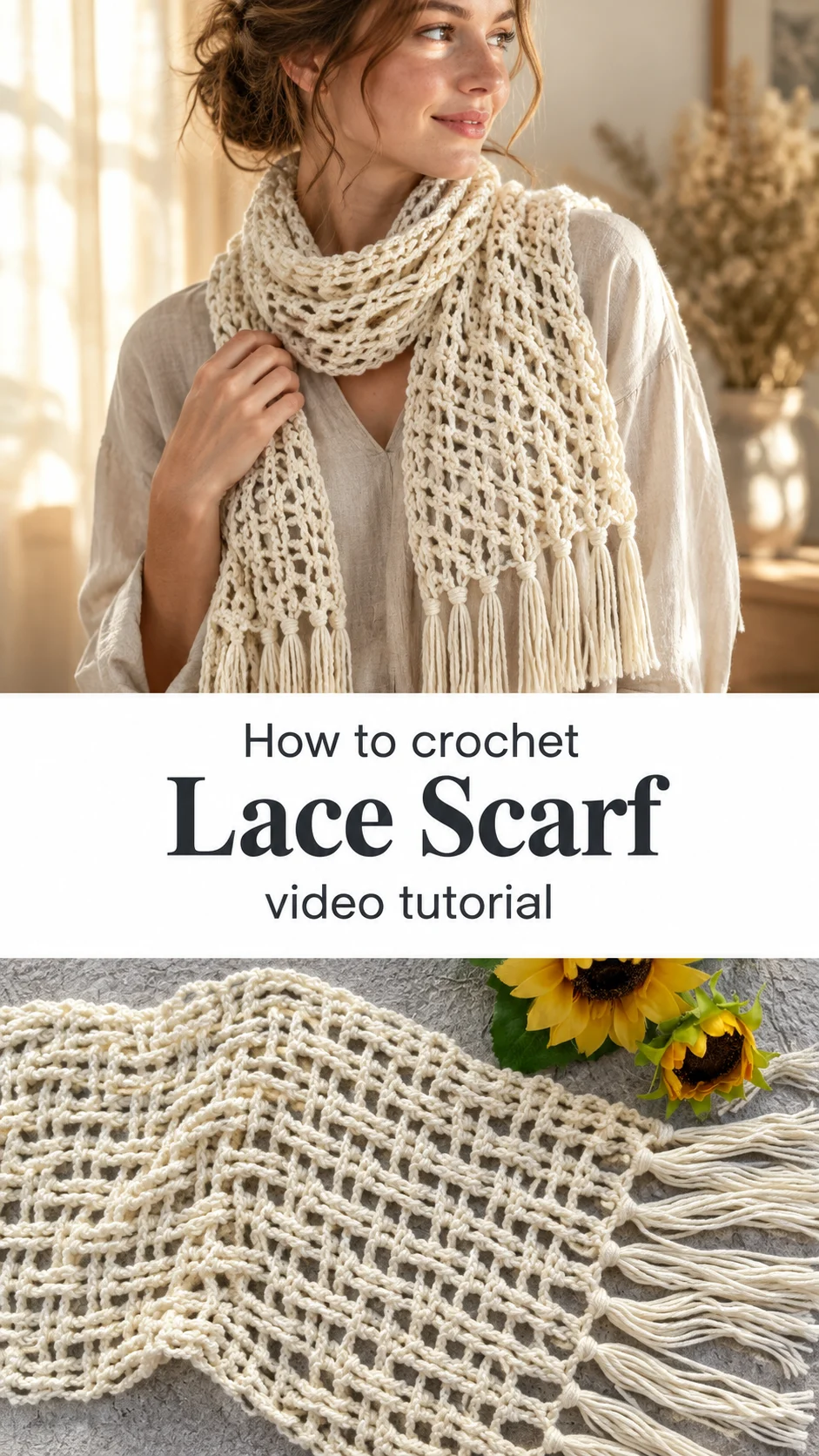
A crochet lace scarf is an airy, open-worked accessory that drapes softly and catches the light with every fold, making it a welcome companion for mild evenings and layered outfits.
The Crochet Lace Scarf
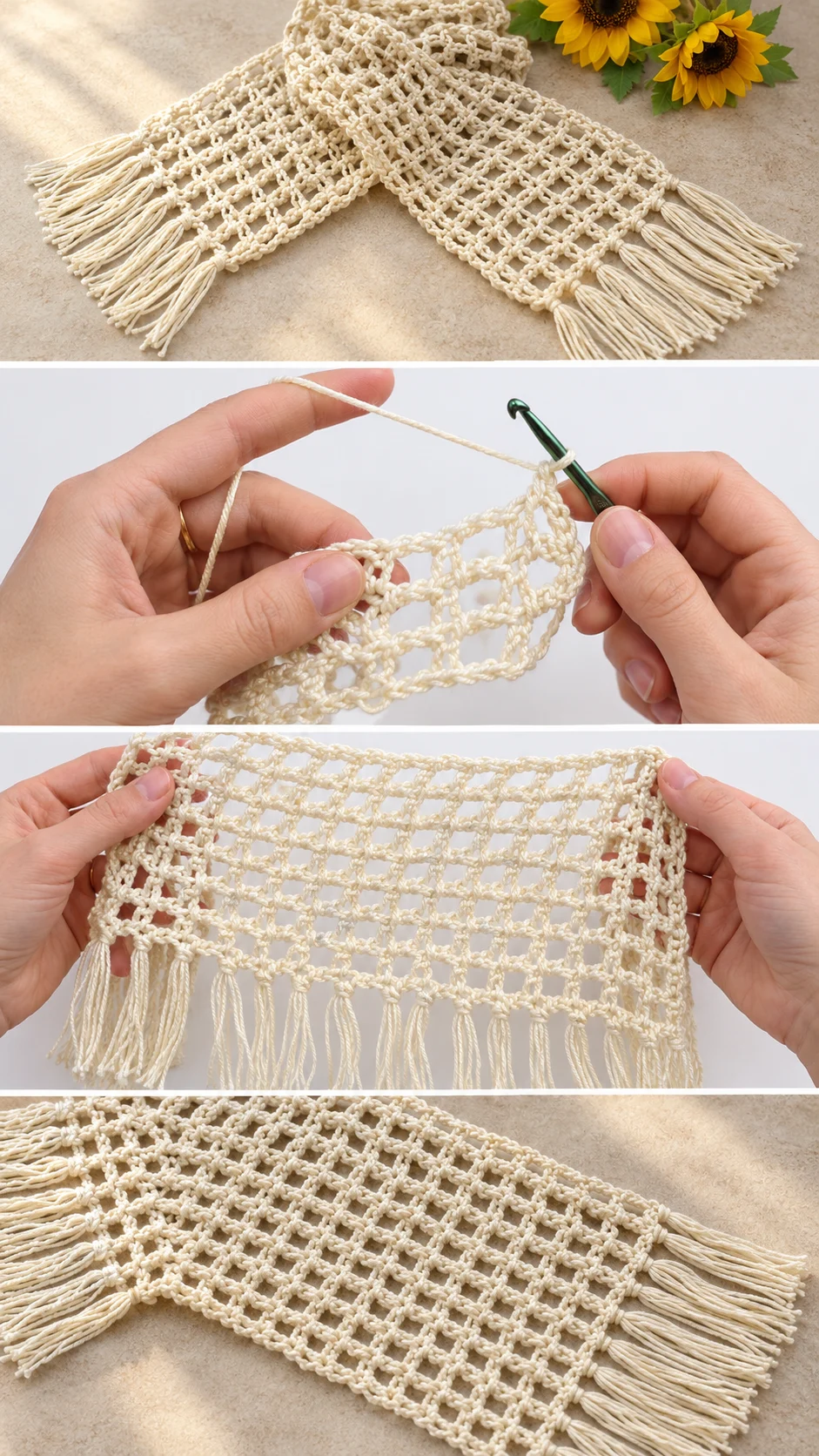
This scarf is built from a woven-looking lace fabric in a soft cream shade, with a row of knotted fringe along one short end that adds movement at the tips. The open grid of the fabric is formed by interlocking rows of raised posts and bars, so the piece reads as lace yet holds together well. Its long, narrow shape gives it a classic silhouette that suits almost any wardrobe. Compared with a dense scarf, this one is light enough to wear all day and open enough to let air through. It works as a finishing touch over a plain blouse, a coat or a simple dress, and the fringe gives it a relaxed, bohemian edge that keeps it from feeling formal.
Wear it loosely knotted at the neck on a breezy spring afternoon, or wrap it once around the shoulders over a summer dress for an evening outing. Because the openwork is so delicate, it also makes a thoughtful gift for someone who appreciates handmade pieces with a sense of quiet elegance.
Lace Scarf Related Posts:
- Crochet Lace Flower Panel: A Delicate Timeless Treasure
- Crochet Golden Lace Motif: A Timeless Handmade Accent
- Crochet Floral Table Runner: A Timeless Home Accent
- Crochet Sugar Cube Bag: A Charming Everyday Essential
Materials
You will need a cotton or cotton-blend yarn in a light to medium weight, which gives the lace enough structure to keep its grid shape without becoming stiff. Cotton is a good choice here because it holds crisp stitch definition and softens nicely after washing, while a fuzzy or stretchy yarn would blur the open pattern and sag along the length. Choose a crochet hook sized to the yarn label, and consider going down half a size if your fabric looks loose, since a tighter stitch keeps the lace from stretching out of shape. Keep a tapestry needle for weaving in ends and a pair of sharp scissors for trimming the fringe. A measuring tape helps you check length as you work, and a set of stitch markers can make it easier to keep track of repeats across the width.
Choosing the Right Yarn for a Lace Scarf
Yarn choice shapes the final drape more than almost any other decision. A mercerised cotton gives a subtle sheen and a clean, defined grid, which suits the cream finish seen here. A cotton-acrylic blend is easier to wash and dries faster, though it may look a little less crisp. Avoid very fine thread for a first attempt, because the openwork becomes fiddly and the fabric can feel fragile. If you want a colour other than cream, start with a mid-tone such as dusty rose, sage or oatmeal, since very dark shades can hide the texture of the lace. Test a small swatch first to see how your chosen yarn behaves.
Understanding the Lace Structure
The lace in this scarf is built from a repeated block of stitches that creates small open squares, separated by raised, textured bars. The bars give the piece its dimension, while the open spaces let the scarf drape instead of lying flat. The fabric grows in a long, narrow strip, so the scarf is worked row by row, with the shaping and fringe placed at the ends. Working in a steady rhythm keeps the grid even, and the repeat becomes easier to read once you have completed a few rows. The fringe is attached at one short edge after the fabric is finished.
Keeping the Grid Even
Uneven tension is the most common reason the squares look lopsided. If the openings shift from one side to the other, slow down and check that you are inserting the hook into the same spot in each stitch. Pulling the yarn a little more gently on the bars also helps the squares stay uniform.
Attaching the Fringe
The fringe is made from several strands of yarn knotted through the edge of the fabric. Cut the strands a little longer than your desired finished length, since they will shorten slightly once trimmed. Knot each bundle firmly through the same stitch spacing so the row of fringe looks orderly. If the knots feel loose, add a small dot of fabric glue at the base before trimming.
Blocking and Finishing Tips
Blocking is the step that transforms a flat lace panel into a finished scarf. Soak the piece in lukewarm water, gently press out the water without wringing, then pin it to a towel or mat in the shape you want. Pins placed along the edges encourage the lace to open evenly, and it dries into a crisp, defined grid. Weave in all ends neatly on the wrong side, trimming them close so they do not show through the open spaces. If the edges ripple, a second light blocking usually corrects them.
If your scarf feels too stiff after drying, a gentle soak with a small amount of fabric softener can relax the fibres. If the squares look too small, the piece was probably worked too tightly, and a slightly larger hook on the next attempt will open them up. If the fringe tangles, separate the strands with your fingers and trim the ends evenly.
Styling Your Lace Scarf
In the photos the scarf rests over a plain cream top, letting the openwork and fringe take centre stage. You can also tie it loosely over the shoulders with a denim jacket for a casual daytime look, or drape it over a dark coat so the cream lace stands out in winter. For a summer dinner, pair it with a linen dress and let the fringe move as you walk.
Caring for Your Lace Scarf
Hand wash the scarf in cool water with a mild detergent, rinsing gently to keep the lace from stretching. Lay it flat to dry, away from direct heat, since heat can flatten the texture and dull the cotton. Store it folded loosely rather than hung, which keeps the fringe from pulling and the grid from warping over time.
Following the Video Tutorial
Watch the video closely at the points where the lace repeat turns, since that is where most crocheters lose their place. Pause and replay those moments until the hand movement feels natural. Notice how the fringe is attached, because the spacing shown in the video is what gives the finished edge its tidy appearance. Work slowly through the first few rows, check the grid often, and you will find the pattern settles into a comfortable rhythm.
A Light and Lasting Handmade Accent
A crochet lace scarf is more than a simple accessory. It is a piece that rewards careful yarn choice, even tension and thoughtful finishing. Choose a soft cotton, keep the grid even, block it well and care for it gently, and it will remain a graceful part of your wardrobe for many seasons.
Video tutorial credit: the stitch demonstration in this article comes from the creator of the video below, so take a moment to visit their channel and watch the full tutorial.
Watch the tutorial here and follow along at your own pace.
Follow us on Pinterest and subscribe to the Newsletter so you don’t miss a thing!
Tutorial and photos of this lace scarf by: Crochet Bits.