
A Crochet Lace Flower Panel is built from repeating flower motifs set within an open mesh grid, creating fabric that is airy yet structured with a whisper of old-world elegance. This single pattern unlocks possibilities for shawls, table runners, curtain panels, garment inserts, summer tops, and delicate bag fronts.
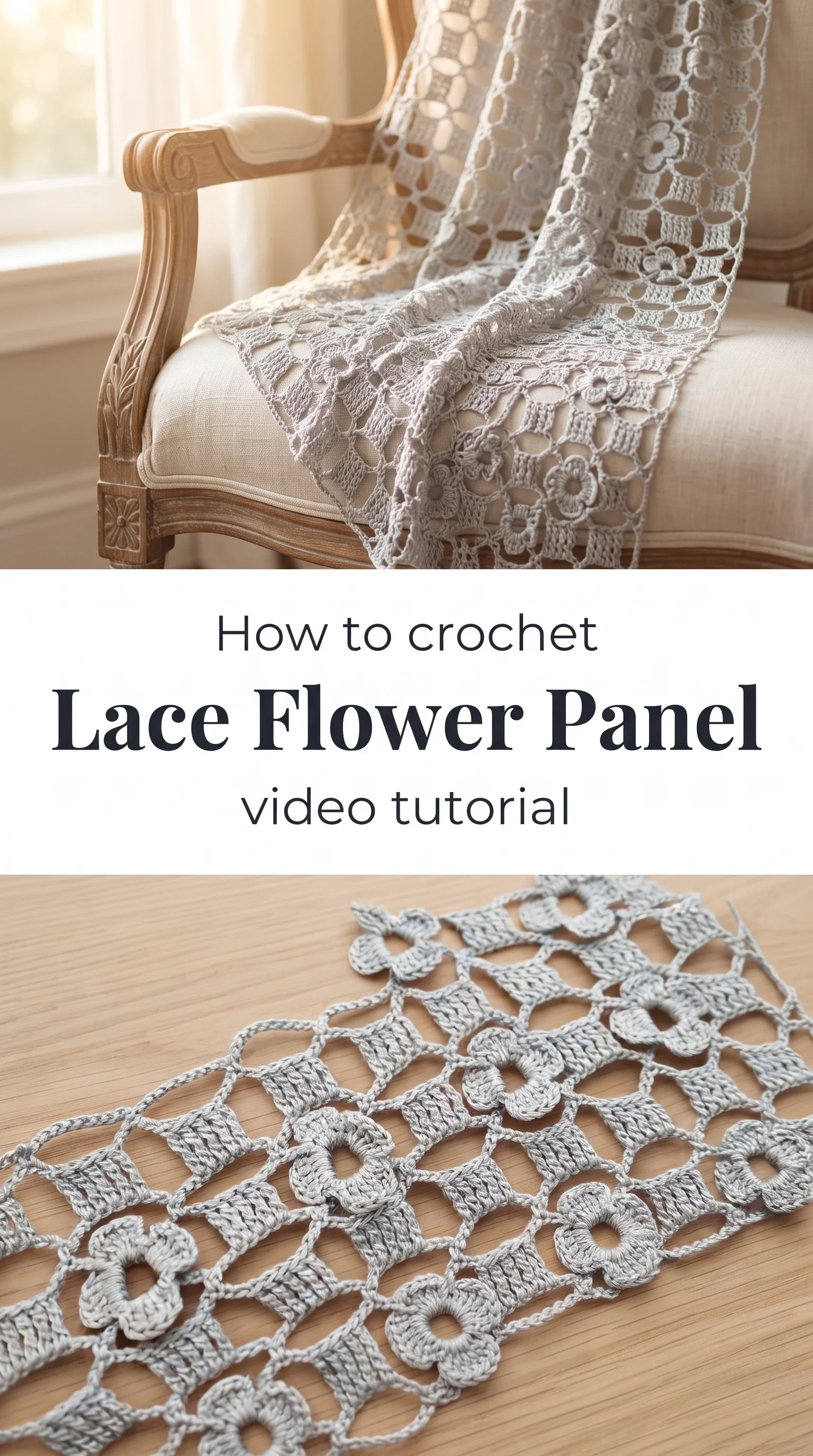
The Lace Flower Panel
The Crochet Lace Flower Panel is the kind of work that makes people stop and ask if you bought it somewhere in a French market or inherited it from a grandmother with impeccable taste. Each small flower sits at the heart of an open square, connected by arching chain loops that give the whole cloth a breathing, latticed quality you can almost see light pass through. It is made for the crafter who loves detail but also loves the meditative rhythm of a repeating motif, because once your hands learn the flower, the rest flows almost without thought. Whether you are a confident beginner or a seasoned intermediate maker, this pattern will feel both approachable and quietly rewarding.
Flower Panel Related Posts:
- Crochet Baby Blanket: A Soft and Timeless Treasure
- Crochet Mesh Tote Bag: A Practical Everyday Essential
- Crochet Lace Motif: A Delicate Timeless Accent
- Crochet Square Motifs: A Beautiful Geometric Design
The soft silver-grey shown in the reference images is an inspired choice, giving the Crochet Lace Flower Panel a cool, understated quality that works across seasons. You could just as easily work it in warm ivory or antique cream for a bridal or vintage aesthetic, or choose a dusty sage or muted blush to bring in a softer, more botanical mood. The beauty of a neutral palette here is that the texture does all the talking, but a single bold color like deep teal or terracotta would make the flowers pop with graphic confidence.
Materials and Tools
For a fabric this open and detailed, a fingering weight or sport weight yarn is the ideal choice, as it allows the mesh structure to hold its shape without looking heavy or collapsing between the motifs. The reference images suggest a smooth cotton or cotton-blend yarn, which behaves beautifully in lace crochet because it has no halo to obscure the stitch definition, and it blocks exceptionally well to open up the mesh. A 2.5mm or 3mm crochet hook is recommended for fingering weight, or step up to a 3.5mm hook if you are working with sport weight and prefer a slightly more relaxed drape. Keep a stitch marker tucked nearby, as it will help you track your flower placement rows as the panel grows.
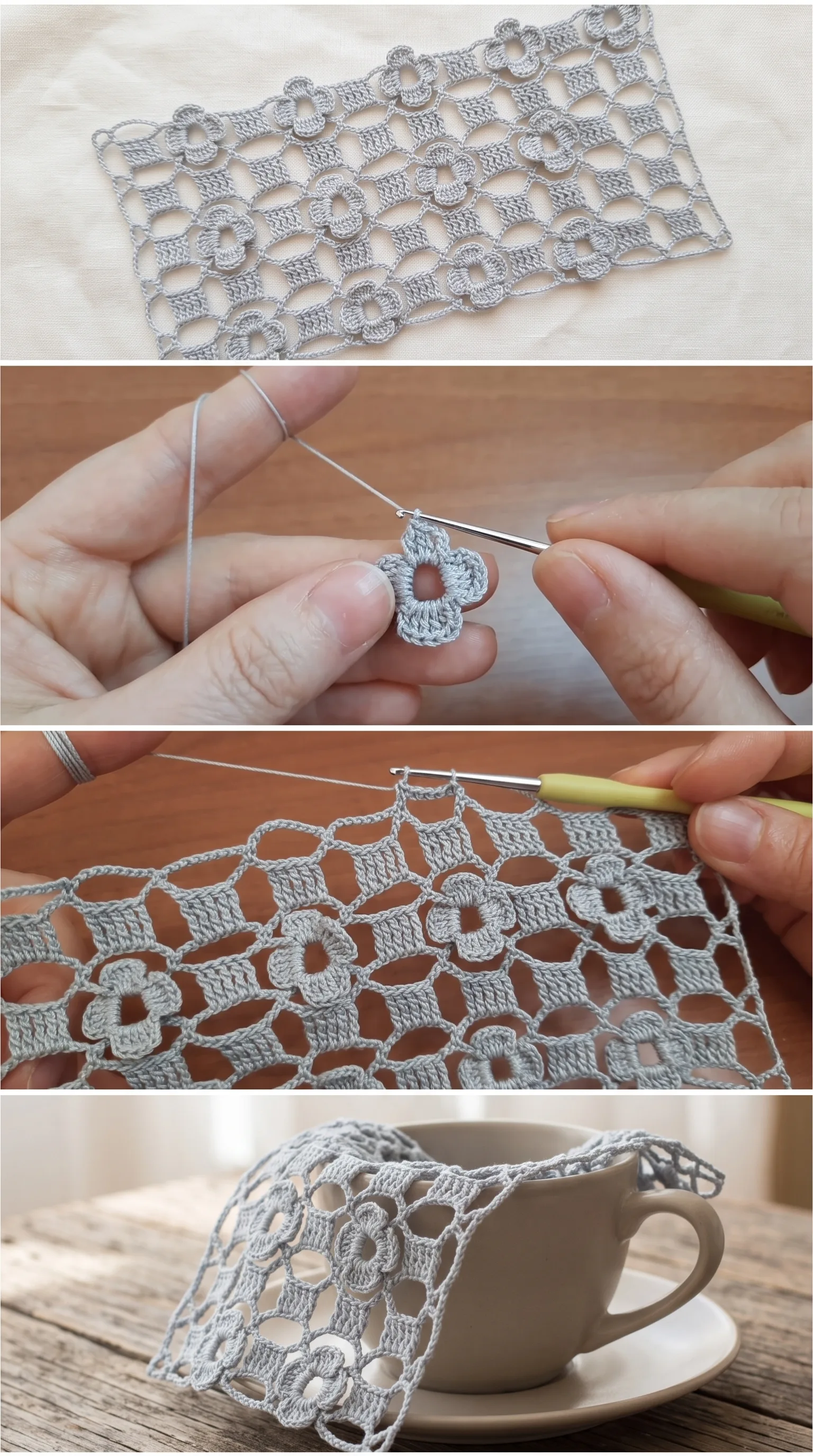
Stitch by Stitch
The Crochet Lace Flower Panel draws on a small and friendly vocabulary of crochet stitches that combine to create its signature floral mesh.
BULLET:CH (Chain) The foundation of the entire mesh structure, used to create the open loops that arc between each flower motif and give the panel its lacy, breathable quality.
BULLET:SC (Single Crochet) Used to anchor the flower petals together at their base and to join motifs securely within the grid without adding bulk.
BULLET:DC (Double Crochet) The primary stitch that builds the body of each flower cluster, giving the petals their slight raised, rounded shape.
BULLET:SS (Slip Stitch) Used to close flower rounds and to travel across the fabric between joining points without adding height or disrupting the flat mesh grid.
Once you have worked two or three flower repeats, the sequence settles into a quiet, meditative rhythm that is deeply satisfying to maintain, the kind of crochet you reach for on slow Sunday mornings or long evenings when you want your hands to be busy but your mind to rest.
Construction
The Crochet Lace Flower Panel is worked flat in rows, with each flower motif completed in place as you build across the width and upward in height, so there is no separate assembly or seaming required. The mesh grid forms naturally around each flower as you progress, meaning the structure grows in a unified, connected way that is satisfying to watch take shape. Beginners will appreciate that mistakes are easy to spot early and simple to correct, and the repeating nature of the motif means each row reinforces your understanding of the pattern. To customise the size, simply adjust the number of flower repeats across your foundation to make the panel wider or narrower, and work as many rows as your project requires for length.
Wearing Your Lace Flower Panel
Finished as a rectangular wrap or shawl, the Crochet Lace Flower Panel drapes beautifully over a linen dress or a simple white shirt for warm-weather dressing with genuine handmade character. Work it longer and narrower to create a table runner that turns any surface into something worth photographing, or stitch it into the front panel of a summer tote for a bag that earns compliments every single time you carry it. Finishing the piece and holding it up to the light is one of those moments that reminds you exactly why you started crocheting.
Caring for Your Lace Flower Panel
Because this piece is most likely worked in cotton or a cotton blend, hand washing in cool water with a gentle soap is the kindest method, allowing you to handle the fabric with the care it deserves. After washing, do not wring or twist the panel. Instead, press it gently between two clean towels and then wet block it flat by pinning the mesh open on a foam board to preserve the shape of every flower and the openness of every arch. Once dry, fold the panel loosely rather than rolling it tightly, which can distort the mesh over time. Store it in a breathable cotton bag away from direct sunlight to keep the color fresh and the fibers intact.
Every Crochet Lace Flower Panel you make carries the particular quality of time given generously and skill growing quietly, and that is something no machine-made fabric can replicate. The full video tutorial from Knitting Love walks you through every step of this pattern, so pin this article, pull up the video, and let your hands make something genuinely beautiful.
Follow us on Pinterest and subscribe to the Newsletter so you don’t miss a thing!
Tutorial and photos of this lace flower panel by: Knitting Love 💗.