
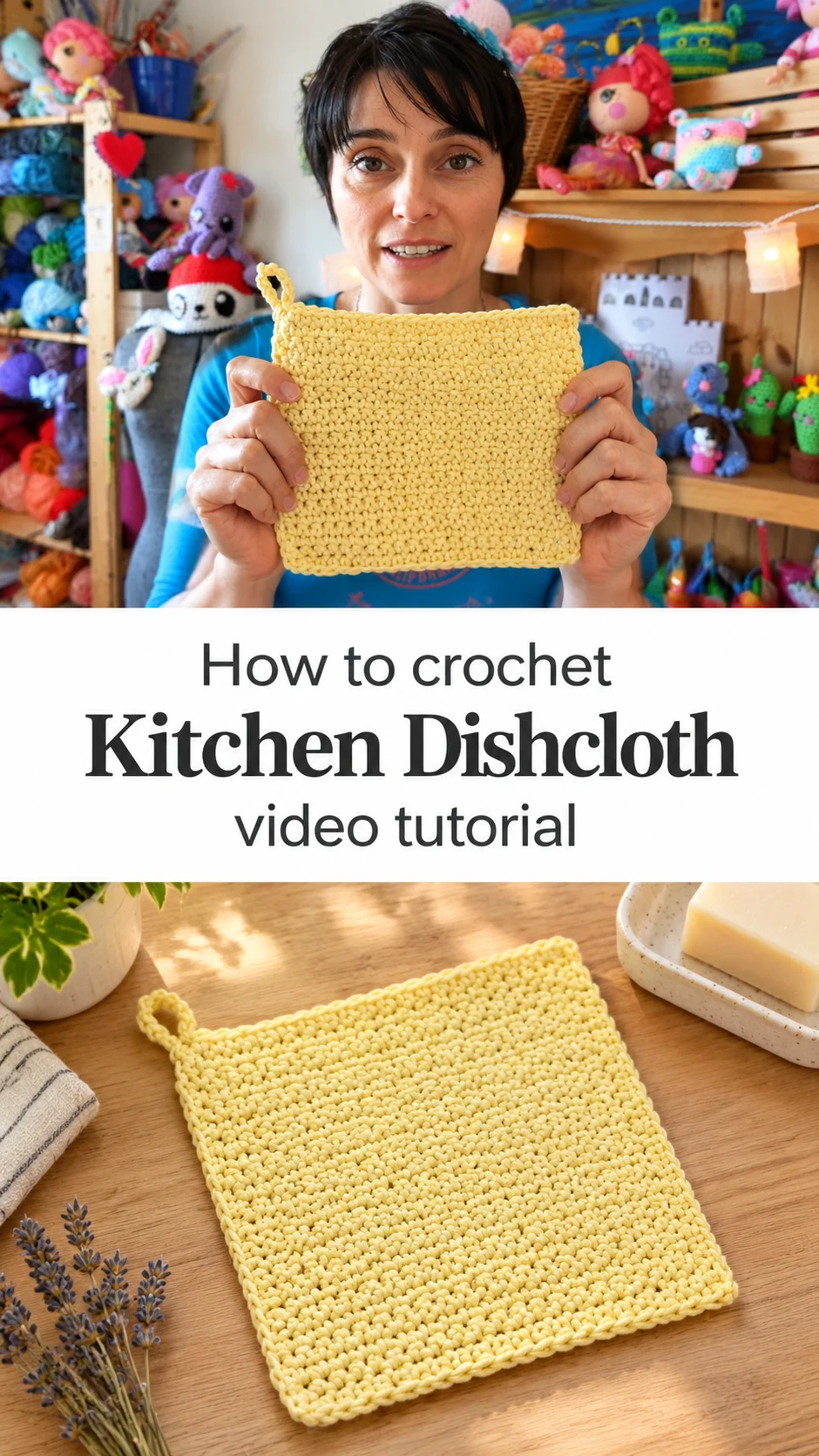
A soft yellow square worked in a simple, close stitch, with a looped hanging tab at one corner, a dishcloth that is as much a pleasure to look at as it is to use.
The Crochet Kitchen Dishcloth
The crochet kitchen dishcloth is a small, square-shaped piece built for daily work at the sink. Its dense, even fabric is worked in a soft buttery yellow that brightens a counter the way a fresh lemon does. What sets this design apart is its neat loop at one corner, a hanging tab that lets the cloth dry quickly over a tap or a rail. The square body is close and firm, so it holds its shape and scrubs well. Expect it to live by the sink, hang from a hook, and travel from the kitchen to the dishwasher and back again.
Because it is so small and practical, this project is a natural first choice for new makers who want a finished item in a short session. It also makes a thoughtful gift for a friend setting up a first home or a host who likes handmade touches in the kitchen.
Kitchen Dishcloth Related Posts:
- Crochet Art Stitch: A Stunning and Timeless Design
- Crochet Chain Mail Stitch: A Timeless Knitted Treasure
- Crochet Everyday Tote: A Bold and Colorful Essential
- Crochet Christmas Tree: A Festive Holiday Accent
Materials
You will need a cotton yarn in a light or medium weight, and a hook sized to suit that yarn. Cotton is the right choice here because it absorbs water, releases grease easily through washing, and stands up to frequent hot cycles without going limp. Avoid acrylic blends for scrubbing work, since they tend to hold odours and soften over time. A hook a size or so smaller than the yarn label suggests keeps the stitches tight, which is what gives the cloth its firm, scrub-ready surface. You will also need a tapestry needle for weaving in the ends and a pair of sharp scissors. No stitch markers or notions are required, though a few clips can help you keep your place on the square.
Understanding the Structure
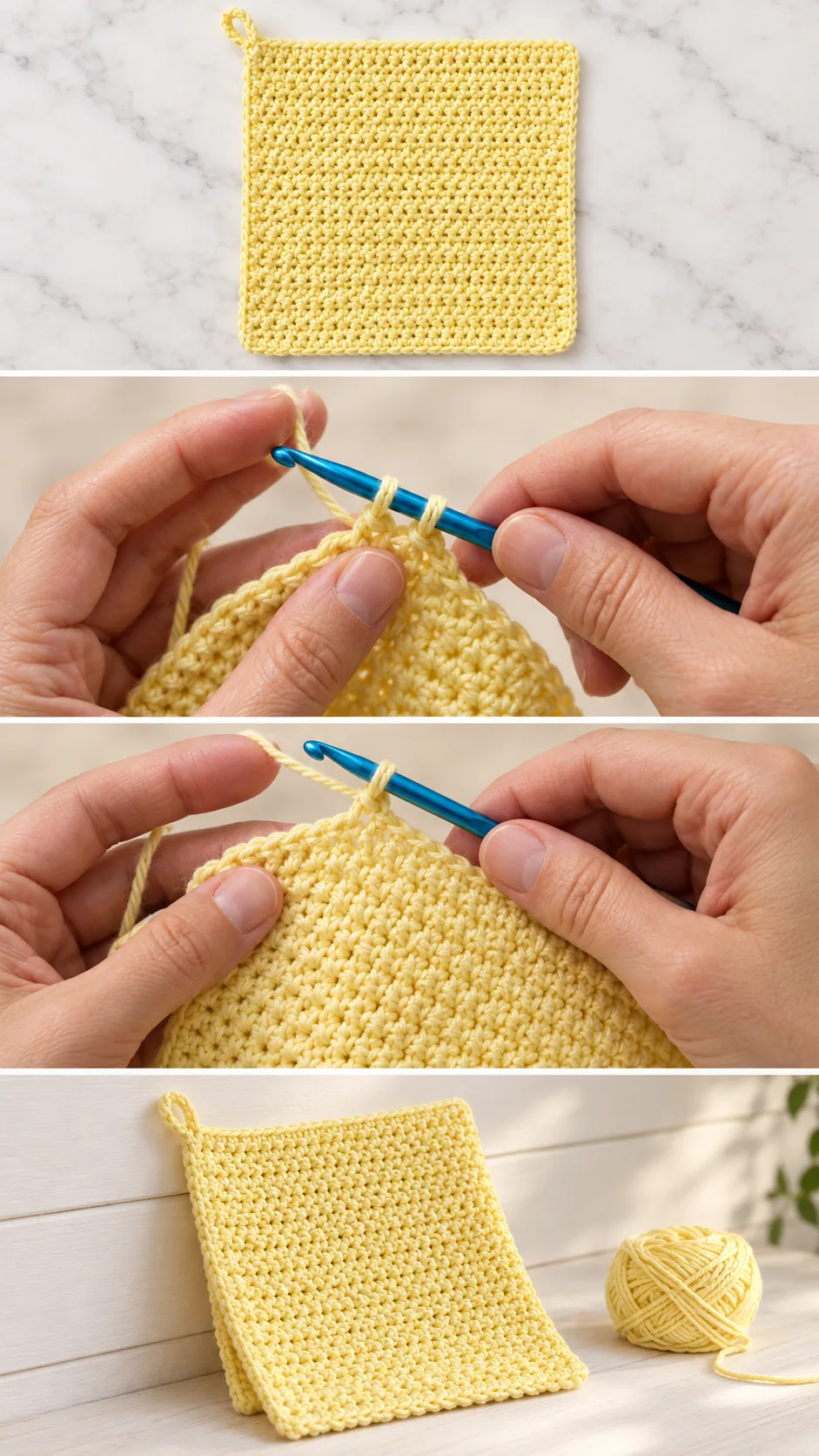
The body is a flat square worked row by row in a dense stitch, so the fabric has no gaps for food particles to hide in. The loop at the corner is added as part of the construction rather than sewn on afterwards, which keeps it secure under the weight of a wet cloth. Watch the tutorial closely for the moment where the hanging tab begins, since this is where the piece changes direction and where most makers pause. Keeping the edges straight depends on counting carefully at the corners, so take your time there.
Keeping the Corners Square
If the corners pull inward, the cloth will look like a lopsided diamond. Work the corner stitches with the same tension as the body, and resist the urge to pull the last stitch tight. If the edges ripple, check that you have not added extra stitches at the ends of rows.
Choosing Colour and Yarn
The yellow in the photos is a warm, soft shade that reads as cheerful without being loud. Cotton in a pale lemon, butter or cream gives the same effect. A deeper mustard or a bright sunflower works well if you want the cloth to stand out more against a white sink. Avoid very pale shades if you cook with turmeric or tomato sauce, since they will show every stain. Multicolour cotton adds interest but can make the finished square look busy, so a solid colour suits this simple design best.
Styling and Using Your Dishcloth
In the photos the cloth is held up front and centre, its bright colour making it the focal point. At home, hang it from the tab over the edge of a sink so it dries between uses. Pair a set of two or three in matching or complementary shades for a tidy kitchen drawer. Give one as a gift tied with twine alongside a bar of soap or a jar of honey.
Finishing Tips for a Clean, Even Cloth
Weave in ends neatly along the back so they do not catch on sponges or dishes. If the square looks uneven, a gentle wet block will relax the stitches and even out the edges. Stiffness after washing is usually a sign of tension that was too tight, so block lightly and let it air dry flat. If the tab looks thin, work the loop a little more firmly so it can bear the weight of a soaked cloth.
Caring for Your Dishcloth
Wash in warm water with regular detergent, and launder on a hot cycle when possible to lift grease and keep the cotton fresh. Dry the cloth fully before folding it, since trapped moisture encourages odour. Replace it once it becomes thin or holey, as a worn cloth can no longer scrub effectively.
Following the Video Tutorial
Watch the video with your hook in hand, pausing whenever the creator changes stitch or starts the tab. Replay the corner sections as many times as you need. Work the square in a steady rhythm, checking your edges every few rows so any drift is caught early.
A Simple Handmade Kitchen Companion
The crochet kitchen dishcloth is simple in its shape but practical in every detail, from its firm, scrub-ready fabric to its handy hanging loop. Cotton yarn, a snug hook, and careful attention at the corners decide whether it turns out well. Make one for yourself, then another to give away.
Video tutorial by the creator featured in the video, available at the link below.
Watch the Tutorial
Follow us on Pinterest and subscribe to the Newsletter so you don’t miss a thing!
Tutorial and photos of this kitchen dishcloth by: Jayda InStitches.