
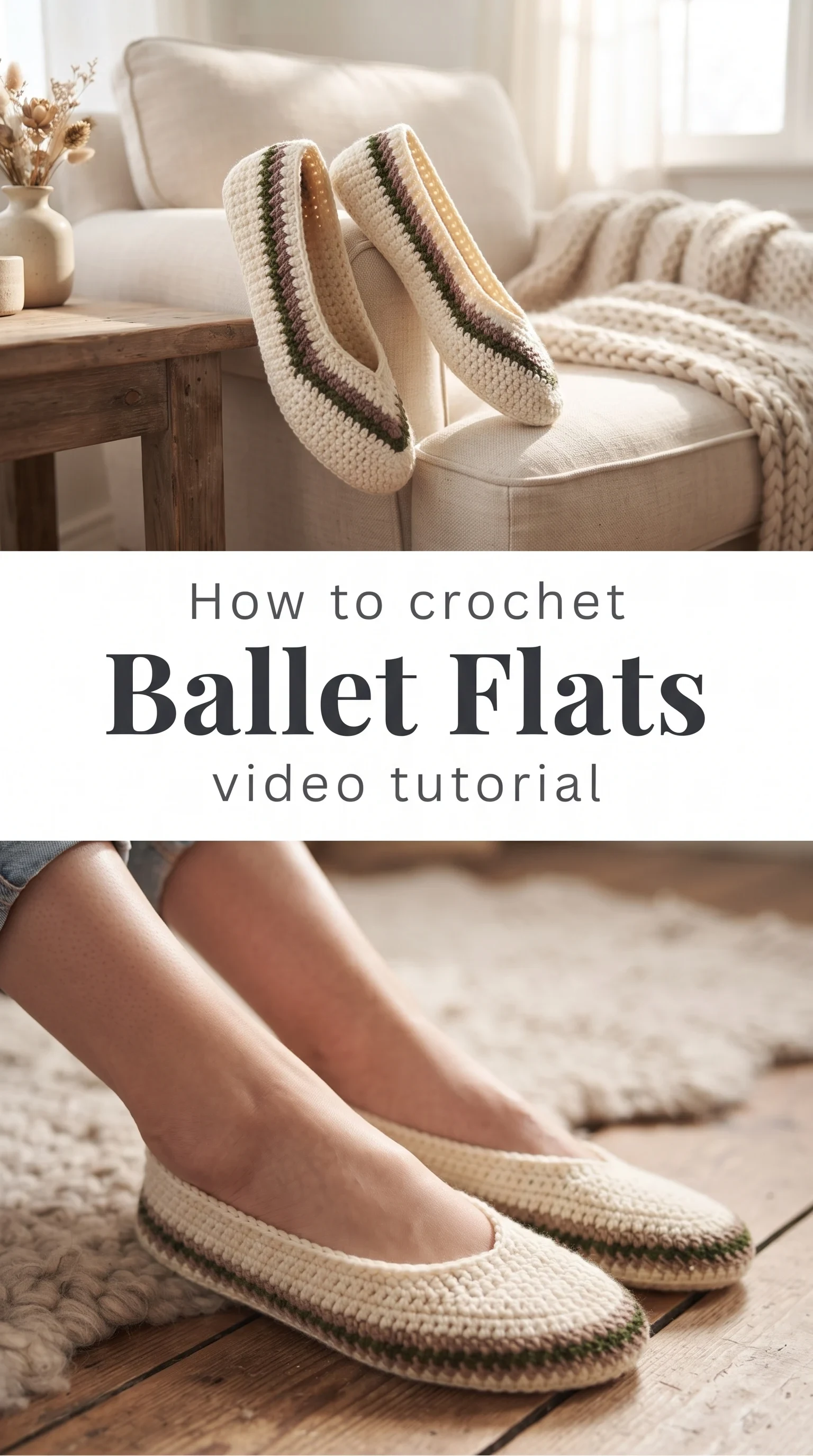
I am genuinely so excited to share this Crochet Ballet Flats tutorial with you, because it combines the softness of handmade knitwear with the most graceful silhouette in footwear. The way the zigzag stripe wraps around the sole edge gives these flats a quiet sophistication that makes them feel less like house slippers and more like something you would actually want to be seen wearing.
The Ballet Flats
Crochet Ballet Flats sit in that rare sweet spot between cosy and refined, shaped like a classic ballerina flat with a low-cut vamp, a smooth fitted toe, and a scalloped sole edge that catches the eye without demanding attention. They are airy yet structured, holding their shape around the foot while remaining light enough to feel like wearing almost nothing at all. This pattern is designed with the beginner-to-intermediate crocheter in mind, meaning the construction is logical and forgiving, and the finishing feels genuinely satisfying rather than fiddly or frustrating.
Ballet Flats Related Posts:
- Crochet Flower Granny Square: A Timeless Vintage Charmer
- Crochet Textured Wave Stitch: A Bold Timeless Classic
- Crochet Heirloom Baby Blanket: A Timeless Cherished Gift
- Crochet Heart Bag: A Sweet and Charming Accessory
The colourway shown in the reference images leans into a nature-inspired palette, pairing cream or blush white with deep forest green and warm taupe in a repeating zigzag border stripe. You could just as easily work these in a charcoal and mustard combination for an autumnal feel, or keep them entirely in one soft neutral for something quietly minimal. However you colour them, Crochet Ballet Flats have a way of complementing almost everything in a handmade wardrobe.
Materials and Tools
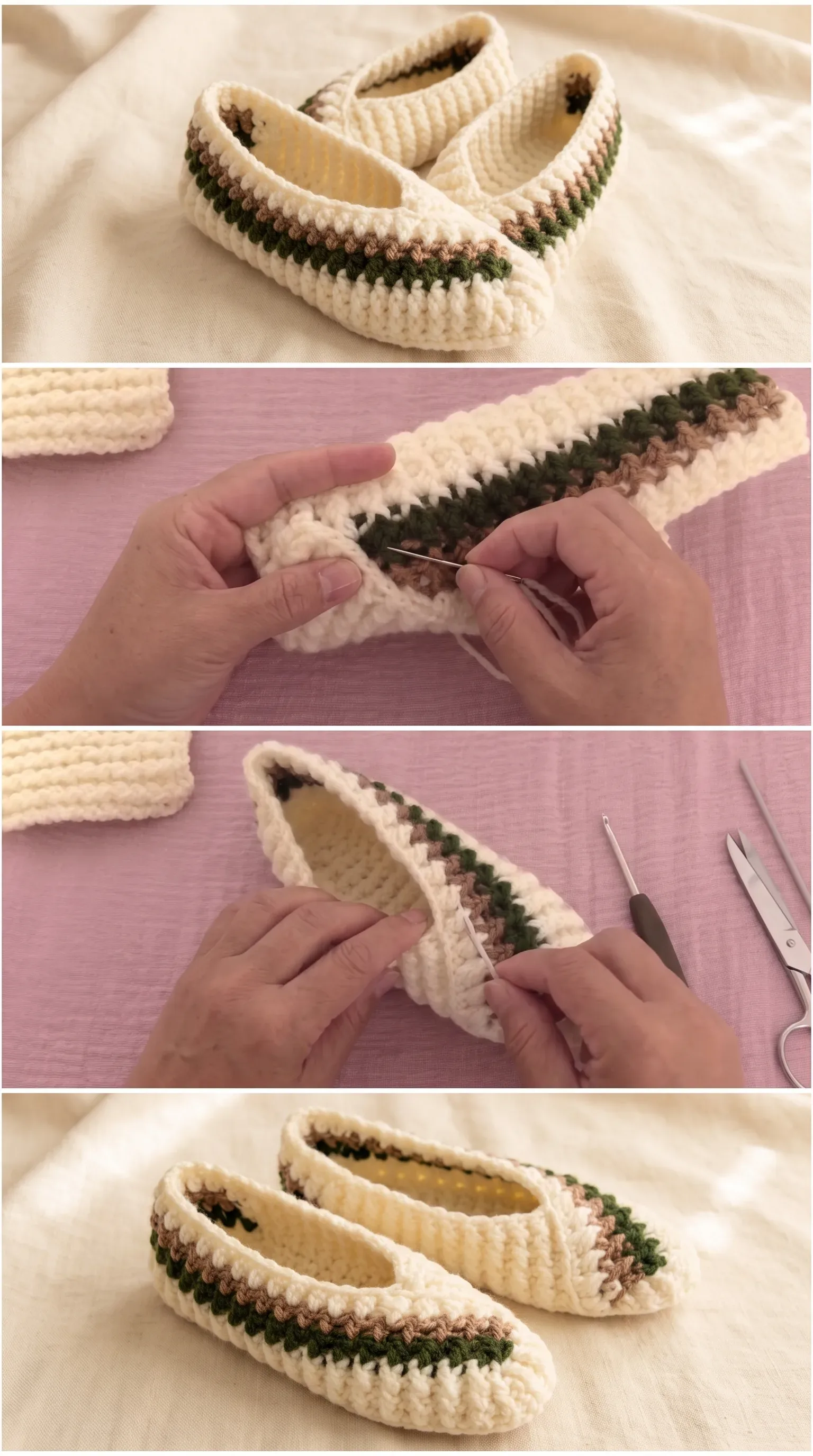
For these Crochet Ballet Flats, you will want to reach for a bulky or chunky weight yarn in your main colour, which gives the fabric that thick, cushioned density visible across the sole and upper in the reference images. The accent stripe colours can be worked in worsted weight yarn, which sits neatly into the zigzag structure without adding unwanted bulk. A natural fibre blend such as wool mixed with acrylic works beautifully here, offering warmth, resilience, and a slight elasticity that helps the flat hug the foot. Work with a 5mm or 6mm crochet hook depending on your tension, and keep a blunt tapestry needle on hand for weaving in the colour-change ends along the stripe border.
Stitch by Stitch
These flats draw from a small, approachable collection of stitches that build on one another naturally.
BULLET:SC (Single Crochet) The foundational stitch used throughout the sole and upper body, creating a dense and stable fabric that holds its shape under foot.
BULLET:DC (Double Crochet) Used along the side panels and upper edge, the DC adds height and a slightly open, flowing texture that softens the silhouette.
BULLET:SL ST (Slip Stitch) Essential for joining rounds and creating clean, invisible seam lines where the panels meet during assembly.
BULLET:YO (Yarn Over) The core action behind the zigzag stripe technique, where controlled yarn overs create the characteristic peaks and valleys of the accent border.
Once you settle into the meditative rhythm of the single crochet rows across the sole, the rest of the construction flows with a quiet, almost hypnotic ease that makes this project genuinely pleasurable to sit with over an afternoon.
Construction
The Crochet Ballet Flats are built in flat panels that are then folded and seamed together, starting with a rectangular sole worked in rows of SC before the upper is picked up and worked upward along the long edges. The zigzag stripe border is added as a separate element and then seamed or slip-stitched into place along the sole perimeter, which is what creates that distinctive scalloped edge visible in the finished images. If you are newer to crochet, this panel-and-seam construction method is actually easier to manage than working entirely in the round, because you can check your sizing flat before committing to the join. To customise the fit, simply add or subtract rows from the sole rectangle before you begin the upper, adjusting length without needing to rework any other part of the pattern.
Wearing Your Ballet Flats
Pull these on over a pair of thin cotton socks on a cool morning and pair them with linen trousers and an oversized knit for that layered, slow-morning aesthetic that makes staying home feel intentional. They work equally well as indoor slippers dressed up with a long house dress or as a soft accompaniment to weekend loungewear. Every time you look down at your feet and see those handmade zigzag stripes, you will feel the quiet satisfaction of having made something functional and genuinely beautiful.
Washing and Storing Your Crochet Ballet Flats
If you have worked your flats in a wool-blend yarn, hand washing in cool water with a gentle wool wash is the safest approach, laying them flat on a towel to dry in their natural shape rather than hanging, which can stretch the fabric unevenly. For purely acrylic versions, a cool machine wash on a delicate cycle is generally fine, though always check your yarn label first. Once dry, block them lightly by shaping the toe and sole flat with your hands while the fabric is still slightly damp, which keeps the silhouette crisp and shoe-like rather than rumpled. Store them flat or stuff the toe lightly with tissue to help them hold their shape between wears.
The full step-by-step video tutorial for these Crochet Ballet Flats walks you through every stage of construction with clear close-up detail, so even if you are working through seaming for the first time, you will feel confident in every step. Handmade footwear carries something deeply personal in it, and these flats are exactly the kind of project you finish and immediately want to make again in every colour. If you make a pair, share your photo on Pinterest and tag your colourway so the rest of the crochet community can find their own inspiration.
Follow us on Pinterest and subscribe to the Newsletter so you don’t miss a thing!
https://www.youtube.com/watch?v=oQD6EQOIcAU