
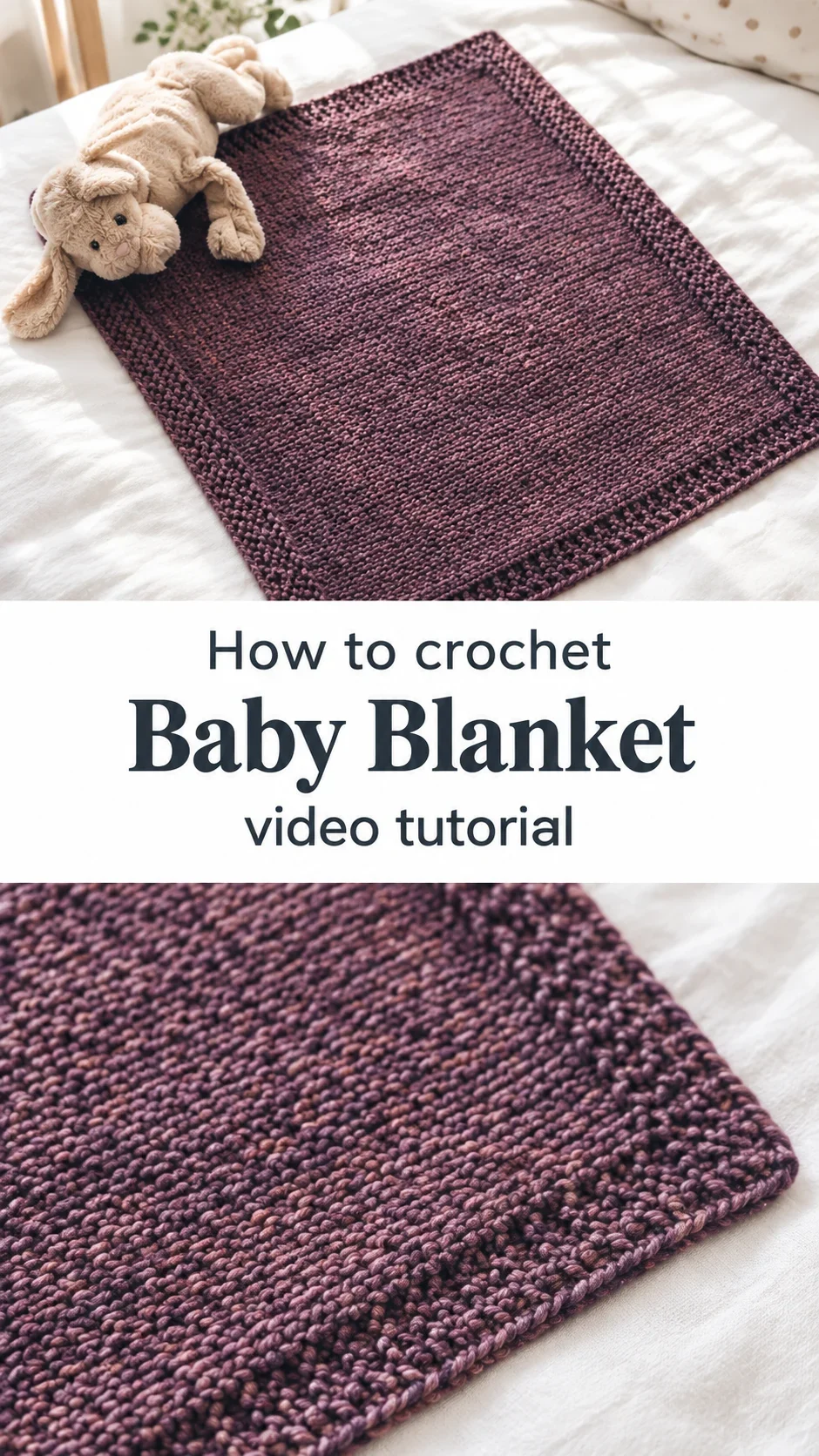
A soft, deep plum throw worked in a textured, heathered yarn, finished with a neat garter-style border, that feels as cosy to hold as it looks to admire.
The Crochet Baby Blanket
A crochet baby blanket is one of those projects that stays with a family long after the baby has outgrown it. This one is worked as a generous square in a rich plum shade with flecks of rust and berry running through the yarn, giving the fabric a warm, almost tweedy depth. The fabric is dense and closely worked, with a soft, cushioned surface that lies flat and feels pleasantly weighty across the hands. A band of slightly different texture frames all four sides, giving the square a tidy, finished edge. The look is understated rather than fussy, so it suits a nursery, a pram, or a moses basket just as easily as a grown-up’s sofa. Because the piece is a single flat square, it is an approachable project for a confident beginner who wants something useful and beautiful.
Watching the square take shape is part of the appeal. The body is built from one continuous piece, so there are no seams to join at the end and no motifs to arrange, which keeps the focus on the fabric itself. The frame of textured edging then turns that plain field into a blanket with a clear, deliberate outline.
Baby Blanket Related Posts:
- Crochet Daisy Lace Motif: A Delicate Floral Accent
- Crochet Fan Stitch Table Runner: A Timeless Home Accent
- Crochet Heart Bag: A Sweet and Charming Accessory
- Crochet Knit-Look Mini Bag: A Chic Everyday Accessory
Materials
A baby blanket like this rewards a soft, washable yarn. The sample is clearly a wool-blend or a worsted-weight acrylic-blend with some heathering, and a yarn of that kind will keep its softness through many washes while holding the stitches neatly. Choose a worsted-weight yarn in a plum or similar tone with some variegation, since the flecks of colour hide small inconsistencies in the stitches. Pair it with a hook or pair of needles sized to the yarn label, and check your gauge on a small swatch first, because a slightly looser fabric will feel softer against delicate skin. You will also need a blunt-tipped yarn needle for weaving in ends, sharp scissors, and a stitch marker to keep track of the edge. A plain wool-free option is a good choice for anyone sensitive to wool, and it is well worth buying a little extra yarn so you are never caught short near the end of the border.
Choosing the Right Yarn for a Soft Blanket
The yarn decides how the blanket will feel for years. A fully acrylic yarn is easy to wash and dries quickly, which suits a baby item that will see frequent laundering. A wool or wool-blend gives a warmer, more springy handle and a lovely heathered depth, but it needs gentle washing. Avoid very fine yarns for this project, because the square will take a long time to finish and will feel stiff rather than cuddly. If the fabric looks too stiff as you work, switch to a slightly larger hook, which opens the stitches and relaxes the fabric without changing the size of the piece.
Understanding the Textured Border
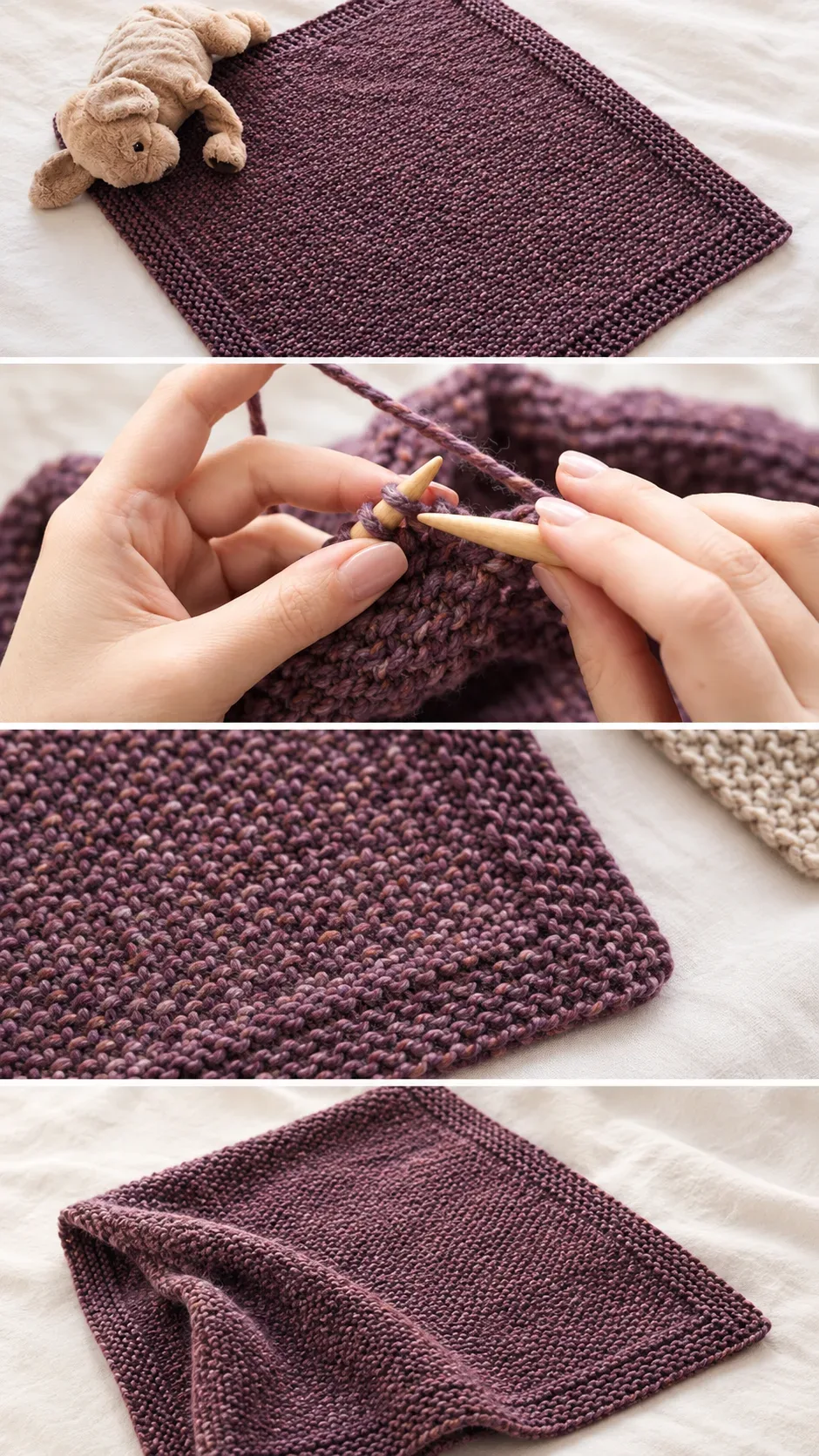
The frame around the square is what gives this blanket its tailored look. It is worked with a textured stitch that differs from the body, so the edge stands slightly proud and sits crisply against the flat centre. When you reach the border, slow down and keep your tension even, because the transition from the body to the frame is where wobbly corners tend to appear. Work each side evenly and count your rows along each edge so that the four sides match.
Keeping the Corners Square
Corners are the most common place for a square to drift. Work the same number of rows along each side, and at each corner work a deliberate increase so the piece turns cleanly. If one side ends up longer than the others, unpick back to the last corner rather than trying to correct it at the end, because a small fix now saves a lot of frustration later.
Tips for a Neat, Flat Finish
Block the finished square gently. Pin it to size on a towel, mist it with water, and let it dry fully flat, which evens out the stitches and relaxes any tight areas along the border. Weave in every yarn end on the wrong side, running the tail through several stitches in two directions so it does not work loose. If you notice the fabric puckering along one edge, the tension in that section is likely uneven; a gentle block usually resolves it.
Caring for Your Baby Blanket
Wash the blanket on a gentle cycle in cool water, using a mild detergent. Place it in a mesh bag to protect the stitches from snagging. Reshape it while damp and lay it flat to dry, away from direct heat, which can stiffen acrylic and felt wool. Store it folded loosely rather than tightly packed, so the fibres do not crease permanently.
How to Style and Use the Blanket
In the photos the blanket is spread across a crisp white sheet with a soft toy resting on one corner, which shows how the deep colour warms a neutral bed. It works just as well folded over the end of a cot, draped across a pram, or wrapped around a newborn for a supervised nap. Beyond the nursery, it makes a thoughtful gift for a baby shower, a new home, or a friend expecting a child. The soft plum tone also sits well in a living room, thrown across a pale sofa.
Following the Video Tutorial
The video tutorial is the best guide for the stitches themselves. Watch closely at the points where the body turns into the textured border, since hand position and yarn tension matter most there. Pause and replay as often as you need, and follow the order shown rather than improvising. Keep the video open beside your work so you can check your progress against the square as it grows.
A Soft Handmade Keepsake
This crochet baby blanket is a practical, lovely piece that becomes more cherished with every wash. Three things will decide how it turns out: a soft, washable yarn, an even tension that keeps the corners square, and a careful block at the end. Get those right, and the blanket will be ready for years of quiet, comforting use.
Video tutorial by the creator of this pattern, linked below. Watch it to see the stitches in action.
Watch the full video tutorial below to follow each step of this baby blanket.
Follow us on Pinterest and subscribe to the Newsletter so you don’t miss a thing!
Tutorial and photos of this baby blanket by: CJ Design.