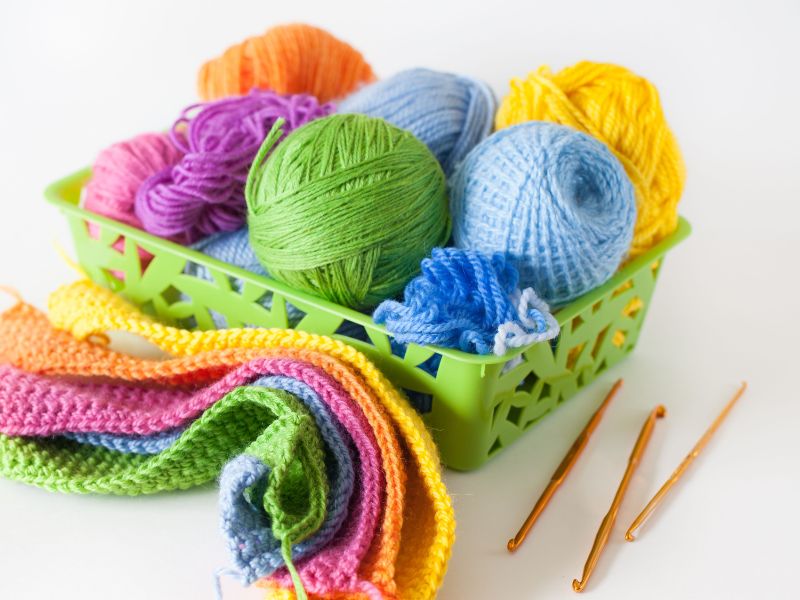
As a beginner crochet enthusiast, you might wonder what supplies you need to get started. A quality set of tools is crucial for creating beautiful projects with ease and precision. In this article, we’ll explore the essential crochet tools every beginner should have to start or enhance their craft.
If you’re new to crochet, you may find our Beginner’s Guide to Crochet helpful. Additionally, our how-to tutorials with videos can assist you in practicing basic stitches.
Essential Crochet Tools and Accessories
The right tools can significantly impact your crocheting experience. From hooks in various sizes to stitch markers and tapestry needles, a variety of tools are essential for every crochet lover.
These basic crochet tools and accessories enable you to create everything from simple dishcloths to detailed afghans.
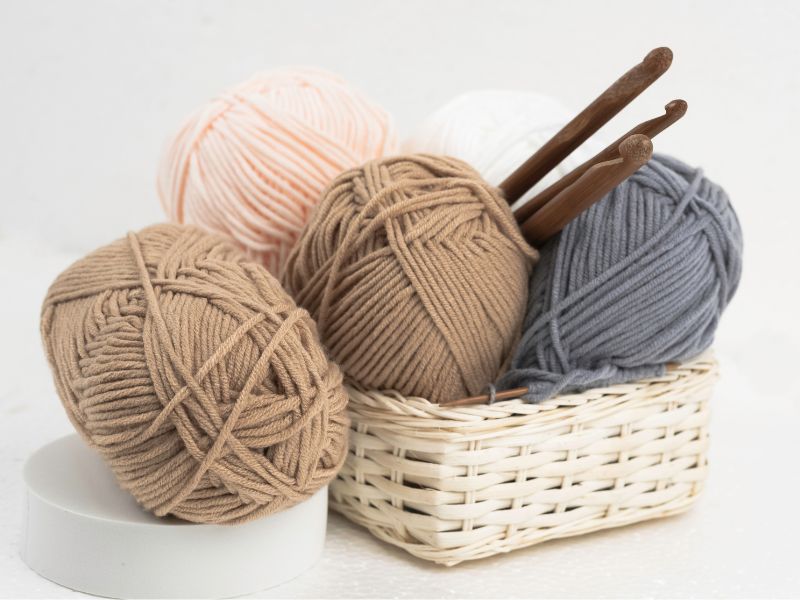
1. Crochet Hooks
Crochet hooks come in materials like aluminum, steel, plastic, and ergonomic designs. Here’s what you should consider:
- Steel hooks are ideal for detailed work with fine yarns and delicate threads.
- Aluminum hooks are versatile and smooth, allowing the yarn to glide effortlessly.
- Plastic hooks are affordable, making them a cost-effective choice for beginners.
- Wooden hooks provide a warm feel that some crocheters enjoy.
- Ergonomic crochet hooks offer a comfortable grip and can reduce wrist fatigue.
Your choice of hook depends on personal preference. Experimenting with different options can help you find the perfect fit.
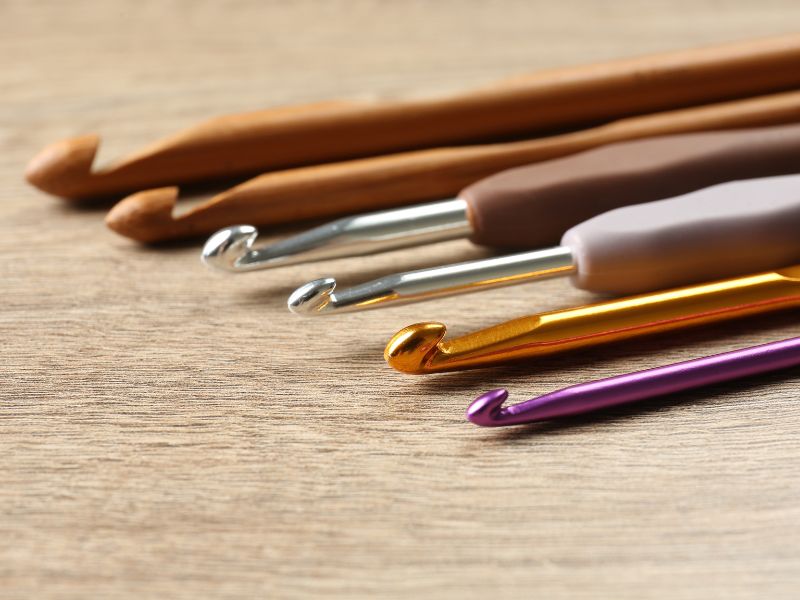
Choosing the correct hook size is crucial. Standard sizes range from 2 mm to 6.5 mm, but they can be found in even smaller or larger sizes. Smaller hooks work well for fine yarn, while larger hooks suit thicker yarns. Beginners often start with a 5 mm crochet hook, which is versatile for various projects and good for practicing stitches. Always refer to your pattern for the recommended hook size.
2. Yarn
Yarn comes in diverse types like cotton, wool, and acrylic. Your choice depends on the project requirements. Cotton is perfect for dishcloths and summer items, wool is suitable for winter garments, and acrylic is versatile and budget-friendly.
Consider yarn weight and texture as they influence the final look and feel of your project. Check your pattern for specific yarn recommendations. As a beginner, using medium weight yarn is advisable. Avoid dark colors and fuzzy textures, as stitches are easier to follow with light-colored yarns.
3. Scissors and Yarn Cutter
A quality pair of scissors is essential for cutting yarn neatly. Yarn cutters are convenient for quick snips, but any sharp scissors will suffice. Make sure your scissors are sharp to avoid fraying the yarn.
4. Stitch Markers
Stitch markers are useful for keeping track of stitches, especially in complex patterns. They are invaluable in amigurumi projects. Types of markers include locking, split ring, and loop markers. Choose split rings for crochet as they can be added and removed easily. Closed markers are more suitable for knitting. Alternatively, use small pieces of contrasting yarn as budget-friendly stitch markers.
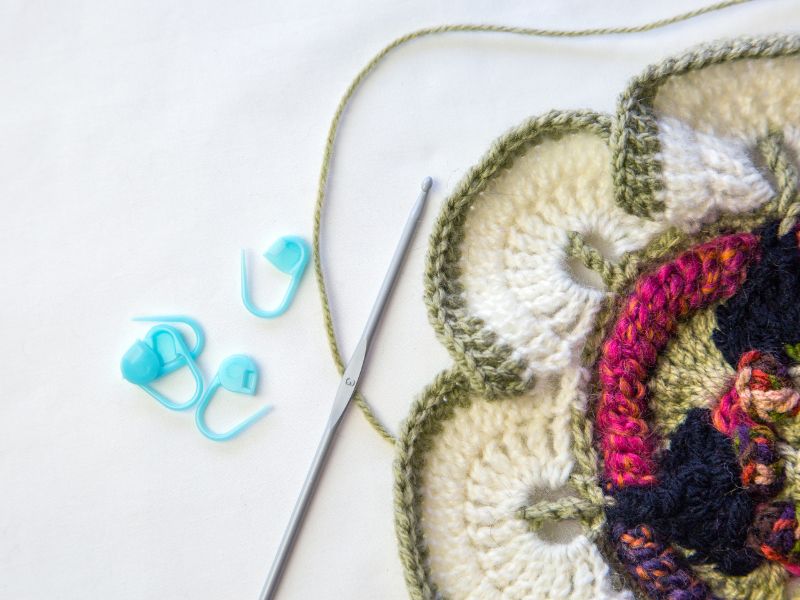
Use stitch markers to indicate the beginning of rounds, increases, or other key points in your pattern, streamlining your workflow.
5. Tape Measure and Ruler
Accurate measurements are vital in crochet to ensure your pieces are the right size. A flexible tape measure is great for curves, while a ruler is useful for flat pieces.
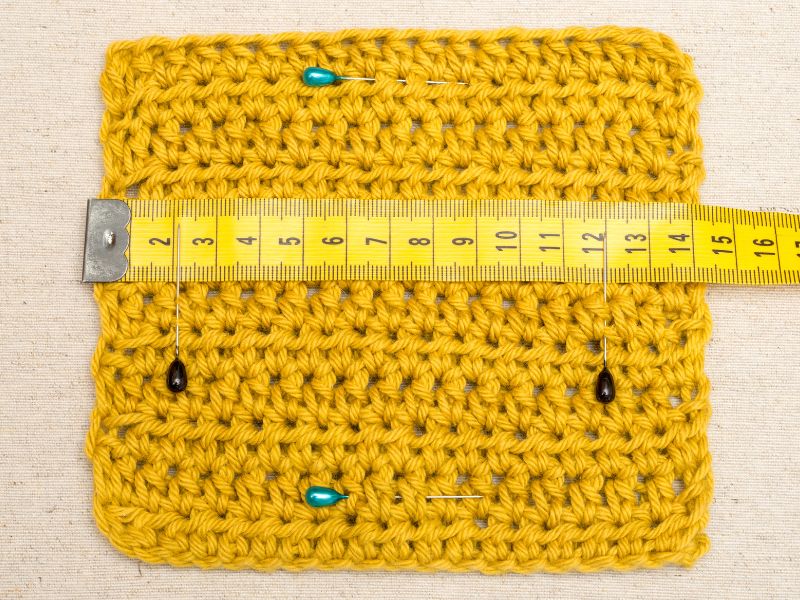
Make a small swatch to measure your gauge, counting stitches and rows per inch. This helps you adjust your hook or yarn size to match pattern requirements.
6. Tapestry Needles
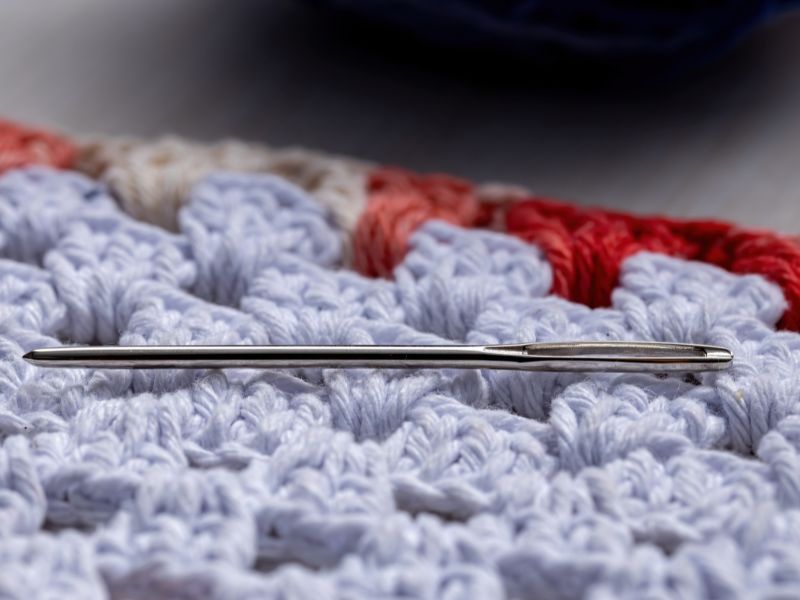
Tapestry needles, or yarn needles, are used for weaving in ends and sewing pieces together. They are essential for any crochet kit and come in various sizes and materials, such as plastic and metal. A large eye makes threading easier. Use tapestry needles to cleanly finish your projects by hiding yarn tails and joining sections seamlessly.
7. Blocking Mats and Pins
Blocking gives your crochet pieces a polished look. Having a blocking mat and pins allows you to shape your work while it dries. Foam mats and interlocking tiles are ideal for blocking.
8. Storage Solutions
Organizing your crochet tools and supplies makes crafting more enjoyable. Options include plastic bins, bag organizers, yarn totes, and hook cases. Consider a project bag to keep your work in one place. Explore various crochet bag patterns for inspiration. A well-organized tote can store all your accessories. Get creative with DIY storage ideas like using jars or boxes to store your crochet hooks. Organize supplies by type and size for easy access.
Even More Useful Crochet Tools
To learn more about crochet tools, read the comprehensive guide: 20 Must-Have Crochet Tools For Beginners. Discover crafting accessories like ball winders, yarn bowls, pom-pom makers, stitch counters, and more.
Where To Get Crochet Supplies Near Me
Finding crochet supplies is easier than ever. Local craft stores like Michaels, Joann, and Hobby Lobby offer a wide range of yarns, hooks, and other tools. Visit independent yarn shops for unique materials. Online options include Amazon and Etsy. Amazon offers fast shipping and competitive prices, while Etsy features handmade items from independent sellers. You’ll find plenty of options to fuel your crochet projects.
Conclusion
The right crochet tools can greatly enhance your crafting experience. Share your favorite tools in the comments and let us know how they have improved your crochet journey.
FAQ
What are the essential tools needed for crochet?
Essential tools for crochet include hooks, yarn, scissors, a tape measure or ruler, and a tapestry needle. These tools help manage and complete your projects efficiently.
What are the different types of crochet hooks and their uses?
Crochet hooks come in materials like aluminum, steel, plastic, and ergonomic designs. Aluminum hooks are versatile; steel is for fine threads; plastic suits bulky yarns; ergonomic designs reduce hand strain.
How do I choose the right size crochet hook for my project?
Choose the right size hook by checking yarn labels and pattern instructions. Adjust size if necessary by making a gauge swatch to meet pattern specifications.
What type of yarn is best for crochet projects?
The best yarn depends on the project: cotton is ideal for summer items, wool for warm garments, and acrylic for versatility and budget-friendliness. Consider texture, weight, and care instructions.
What is the purpose of stitch markers in crochet?
Stitch markers help track stitches, mark the beginning of rounds, and indicate pattern changes. They are especially useful in complex patterns to ensure accuracy.