
Let’s learn to crochet the timeless Granny Square, a pattern that belongs in every maker’s hands. You can use it to build blankets, bags, cushion covers, or join dozens together for a cozy throw.
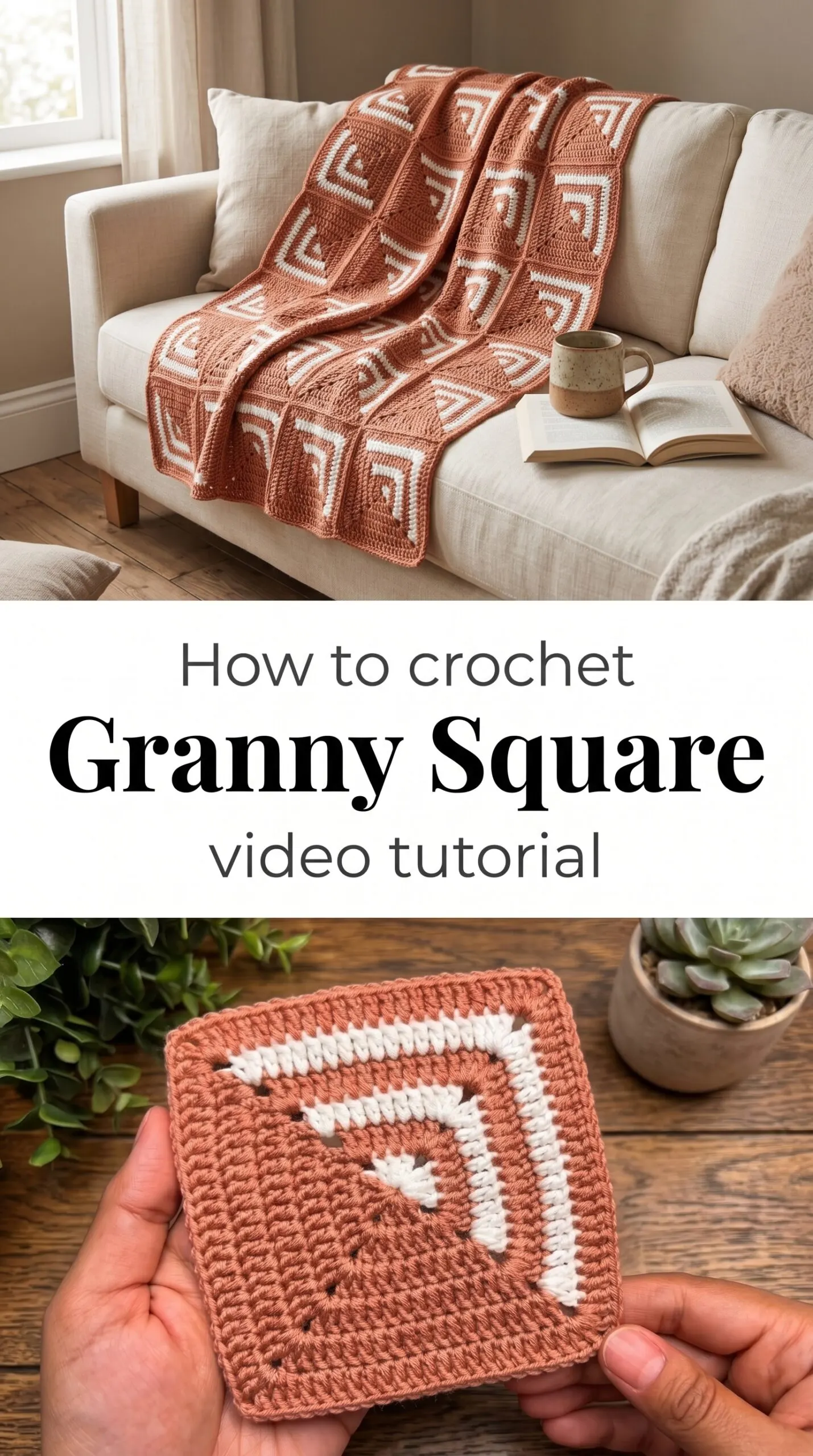
The Granny Square
The Crochet Granny Square is the heartbeat of traditional crochet, a motif that has traveled through generations and continents without losing its charm. It works up quickly, forgives small mistakes, and teaches you the rhythm of rounds and clusters in one satisfying sitting. This is the pattern for makers who want to build something modular, something that grows square by square into whatever their hands need it to become. Whether you crochet one or one hundred, each square carries the same quiet satisfaction.
Granny Square Related Posts:
You can work this Granny Square in two colors as shown in the tutorial, a terracotta paired with soft white that feels warm and grounded, or you might choose jewel tones, pastels, or scraps from your stash. The beauty of this motif is how it adapts to any palette, any mood, any season.
Materials and Tools
For this Crochet Granny Square, you will need a light worsted or DK weight yarn in two colors. The video tutorial uses a 4mm crochet hook, which gives the square structure without making it stiff. Cotton or cotton blends work beautifully for washable projects like dishcloths or baby blankets, while acrylic or wool blends add softness for wearables and home decor. Keep a tapestry needle nearby for weaving in ends as you go.
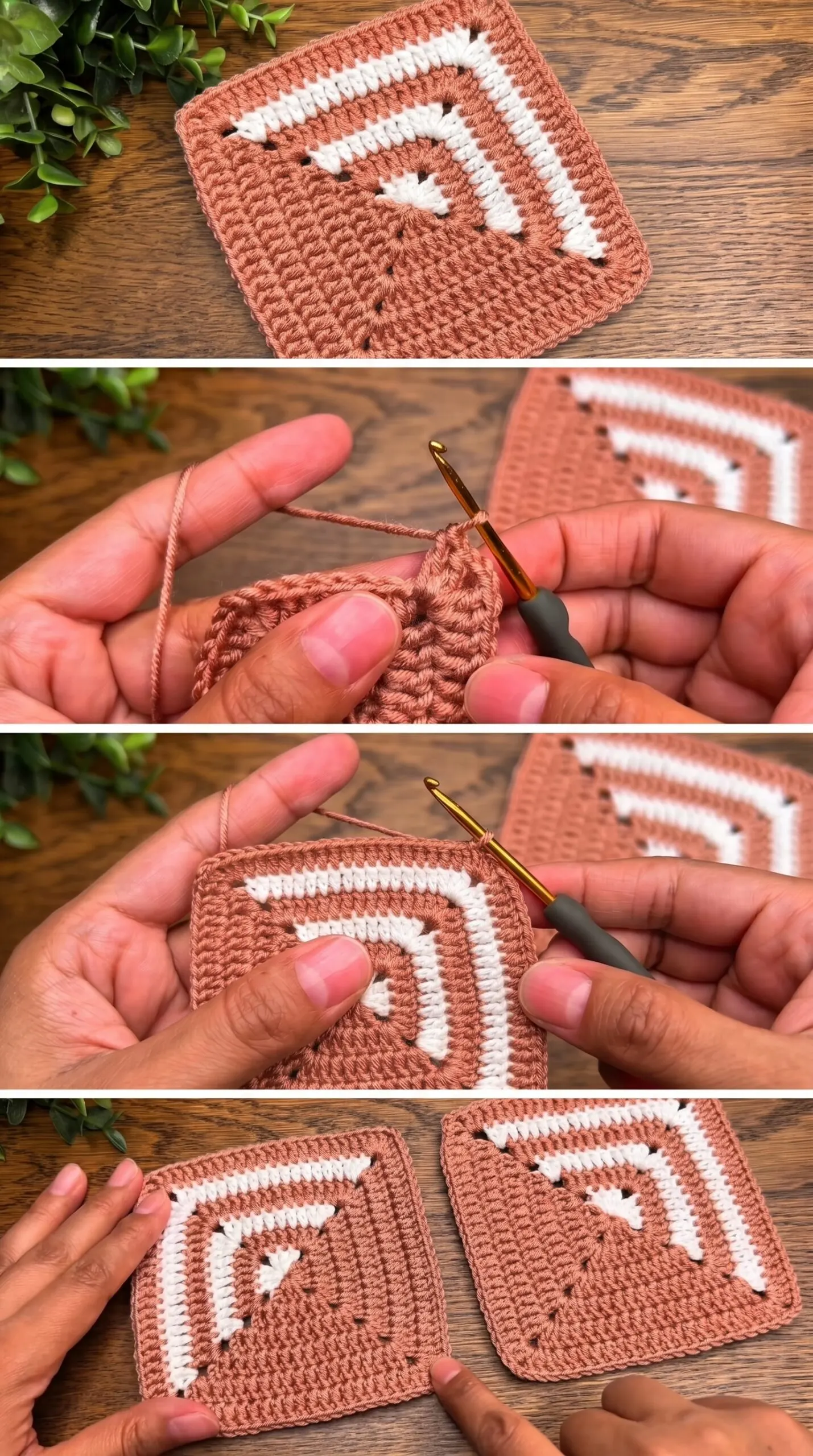
Stitch by Stitch
This pattern relies on a handful of fundamental stitches that repeat in a meditative loop.
BULLET:CH (Chain) The foundation of every round, chains create the space and height needed to build clusters.
BULLET:DC (Double Crochet) The workhorse of the Granny Square, double crochets stack into clusters that form the square’s signature texture.
BULLET:SL ST (Slip Stitch) Used to join rounds invisibly and move your yarn to the next starting point without adding height.
BULLET:SC (Single Crochet) Often worked into corners or edges to anchor the final round and give the square a clean finish.
The rhythm of chaining, clustering, and joining becomes second nature after the first round, and your hands will start to move without needing to think.
Construction
The Crochet Granny Square is worked in the round from the center outward, beginning with a chain ring and building rounds of double crochet clusters separated by chain spaces. Each round alternates between your two colors, creating that classic striped effect that feels nostalgic and fresh at once. Beginners will love how forgiving this construction is, and you can easily add more rounds to make a larger square or stop after four for a coaster-sized motif. The video tutorial walks you through each round with close-up clarity, so you can follow along stitch by stitch.
Wearing Your Granny Square
Once you’ve made a handful of these squares, you can join them into a tote bag, a pillow cover, or a patchwork cardigan that feels like wearable art. Stitch a single square onto the pocket of a denim jacket, or line up a dozen to create a table runner that brings handmade warmth to your dining space.
Caring for Your Granny Square Projects
If you’ve used cotton yarn, your Crochet Granny Square pieces can be machine washed on a gentle cycle and laid flat to dry. Acrylic squares are even easier, tumble dry low and they’ll hold their shape beautifully. For wool blends, hand wash in cool water and block each square lightly with pins to keep the corners crisp and even. Store finished squares flat in a basket or drawer, and they’ll be ready whenever inspiration strikes to join them into something new.
The Granny Square is where so many of us begin, and where we return again and again because it never stops giving. Every cluster, every color change, every joined seam is a small act of making that adds up to something whole. Pin this tutorial and keep it close for your next project.
Follow us on Pinterest and subscribe to the Newsletter so you don’t miss a thing!
Tutorial and photos of this granny square by: Knitting time🧶by Dina.