A cheerful little bear face worked in two warm browns, this coaster brings a touch of woodland charm to the tea table and turns an everyday drink into a small moment of delight.
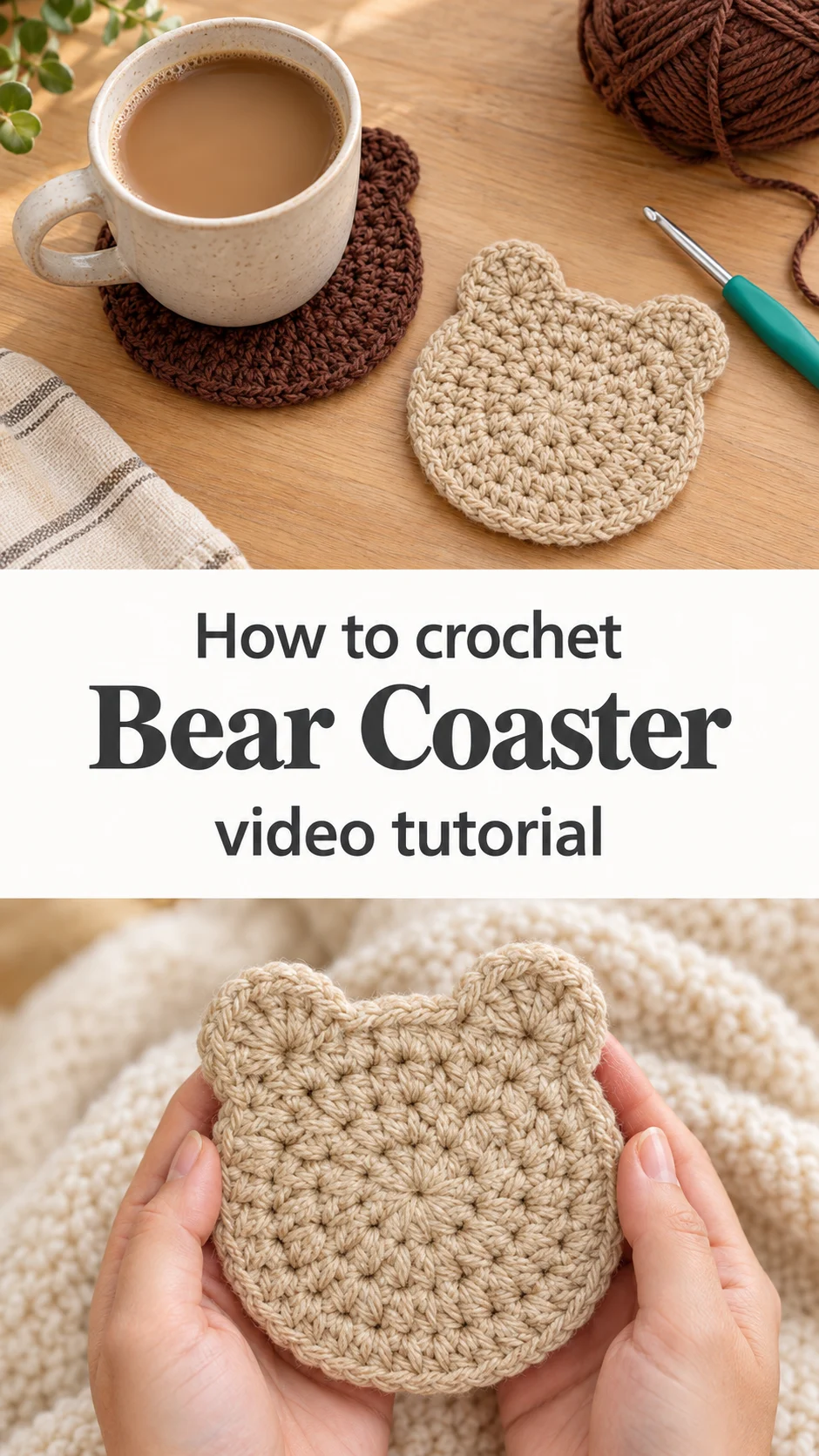
The Crochet Bear Coaster
The crochet bear coaster is a small, round-faced project with a playful silhouette. Its rounded head sits between two neatly formed ears, giving it an instantly recognisable shape that reads clearly even at a glance. What sets this design apart is its simplicity of form: a single flat piece, built outward from a centre, with the ears shaped as part of the main body rather than sewn on afterwards. The two versions shown use a soft tan for the lighter bear and a rich chocolate brown for the darker one, so the same pattern can be made to look like two different characters. Set on a coffee table, a nightstand or a kitchen counter, it adds warmth and a little whimsy. It is also a quick, satisfying make that works well as a gift.
Because the coaster is small, it is an ideal project for using up leftover yarn in complementary shades. Two coasters side by side make a cheerful pair, and a set of four in mixed browns and creams becomes a cosy housewarming present.
Bear Coaster Related Posts:
- Crochet Bag Handles: A Sturdy and Polished Finish
- Crochet Chain Mail Stitch: A Timeless Knitted Treasure
- Crochet Bell Sleeve Hoodie: A Bold and Cozy Statement
- Crochet Layered Flower: A Delicate Floral Masterpiece
Materials
To make a bear coaster like the ones shown, you will need a medium-weight acrylic or acrylic-blend yarn in the colours of your choice, one in a light tan and one in a deep chocolate brown if you want to match the pair. A hook in the size recommended by the yarn label will give a firm, dense fabric that lies flat on a table and resists spills better than a loose, airy one. A firm fabric matters here, because a coaster that stretches or curls at the edges will not sit properly under a cup. You will also need a yarn needle for weaving in the ends and a pair of small scissors. Cotton can be used if you prefer a fabric that is more absorbent and washes well, though it will feel a little heavier. No stuffing, backing or hardware is required, which keeps the project simple and the materials list short.
Choosing Yarn and Colour
The yarn you choose will decide how the coaster behaves in daily use. An acrylic blend gives a soft, springy surface, holds its shape well and is easy to wash, which suits a coaster that will be handled often. Cotton produces a crisper, more structured edge and absorbs moisture, making it practical for cups that sweat. Avoid very fuzzy or mohair-style yarns, because the loose fibres hide the stitch definition that gives the bear its clean outline.
For colour, the tan and brown pairing in the photos is a classic choice. A deep caramel and a cream would create a softer, more gentle bear, while a grey and a charcoal would give a modern, understated look. Keep the contrast between the two shades strong enough that the ears and face read clearly against each other.
Shaping the Bear’s Head
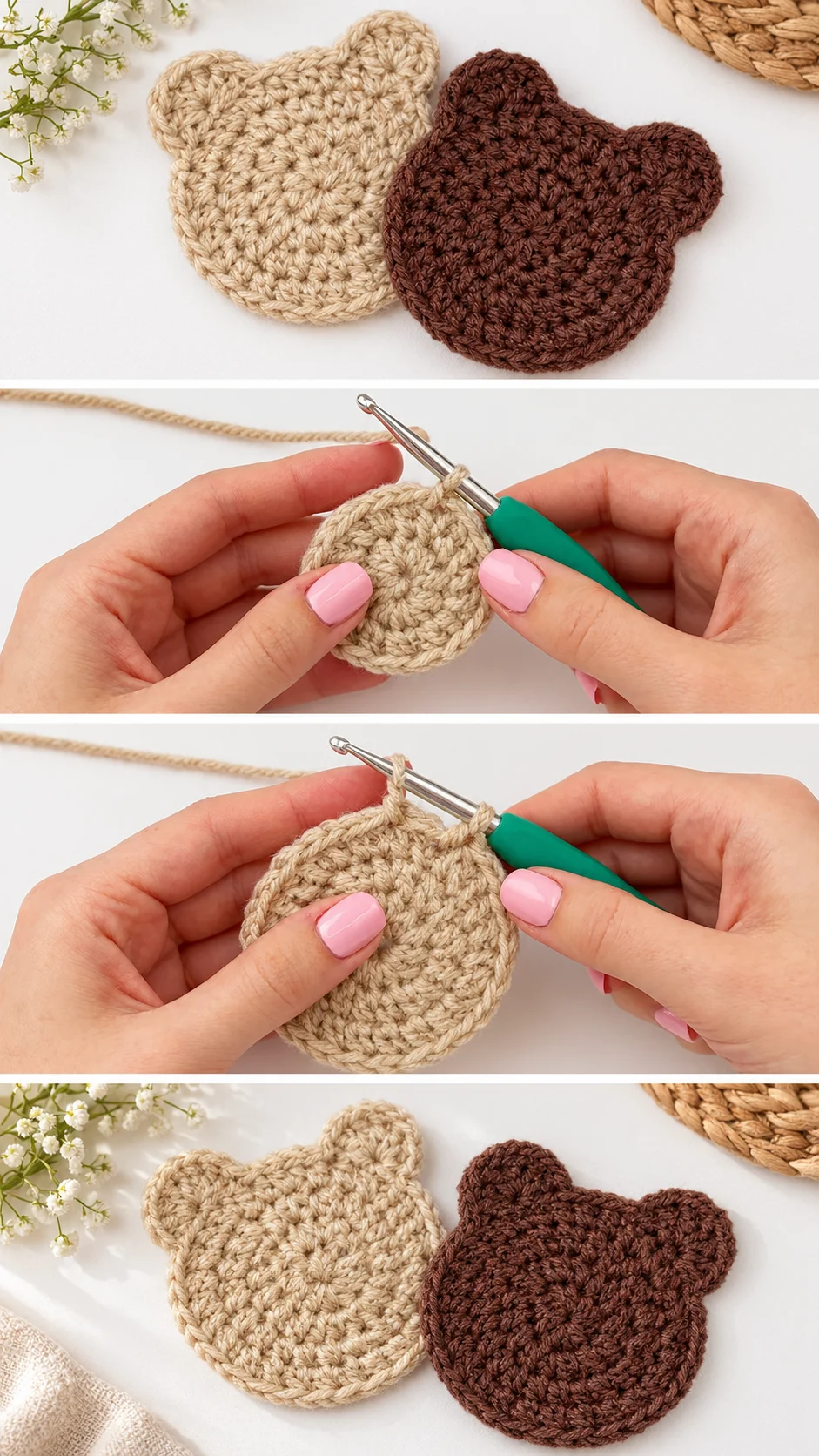
The bear’s head is worked outward from the centre in rounds, and the ears are created by adding stitches at specific points around the edge so the outline begins to rise. The shaping is what makes this piece read as a bear rather than a plain circle, so it deserves close attention. Watch the video closely at the moment where the ears begin to form, paying attention to how the hook moves around the edge and where the increases are placed. Pausing and replaying this section will help you see exactly how the shape develops.
The Signature Detail: The Ears
The ears are the feature that makes this coaster unmistakably a bear. Each one rises from the head as a rounded bump, and it is easy to make them too pointed or too flat. If your ears look shallow, add a round or two of stitches over the ear section before moving on; if they appear too tall or cupped, reduce the increases in the next round. Working the ears evenly on both sides keeps the bear balanced and symmetrical.
Tips for a Flat, Neat Coaster
A coaster must lie flat, so the finishing matters as much as the making. Keep your tension even throughout: stitches that are too tight will cause the edge to ruffle, while loose stitches will let the coaster bow in the middle. If the edge ripples, try working the next round with a slightly smaller hook. Weave in every end neatly along the back, where it will not be seen, and trim them close so they do not catch on cups. Blocking the finished coaster by pinning it flat and lightly steaming it can help it sit smoothly.
Caring for Your Bear Coaster
Acrylic coasters can usually be hand-washed in lukewarm water with a mild detergent, then rinsed and pressed flat in a towel to remove excess moisture. Lay them flat to dry so the shape is not pulled out of true. Cotton versions can be machine-washed on a gentle cycle inside a mesh bag, but reshaping them while damp is still recommended. Store them stacked flat, and avoid hanging them, which can stretch the edges.
Following the Video Tutorial
The video tutorial shows every stitch and every round in order, so it is the best guide for building the bear. Watch the start first to see how the centre is formed, then follow along as the head grows outward. Pause at the ear shaping and again at the finishing, and replay any section until the movement feels familiar. Keep your work close to the camera’s view so you can compare your fabric with the one on screen.
A Sweet Handmade Companion
The crochet bear coaster is a small piece with a big personality. Choose your yarn with care, shape the ears evenly, keep your tension steady and finish the edges neatly, and you will have a coaster that is both practical and delightful. Two shades, a steady hook and a little patience are all it takes to bring this cheerful bear to life.
Video tutorial by the creator of this project, available on YouTube. Watch the full tutorial here:
Watch the video tutorial for this crochet bear coaster to see each stitch and round demonstrated step by step.
Follow us on Pinterest and subscribe to the Newsletter so you don’t miss a thing!
Tutorial and photos of this bear coaster by: ElyseCrochets 💌.