
The Crochet Tunisian Dishcloth is more than a square of orange cotton sitting folded by the sink. It carries the warmth of slow mornings, the quiet satisfaction of hands that made something useful and beautiful at once.
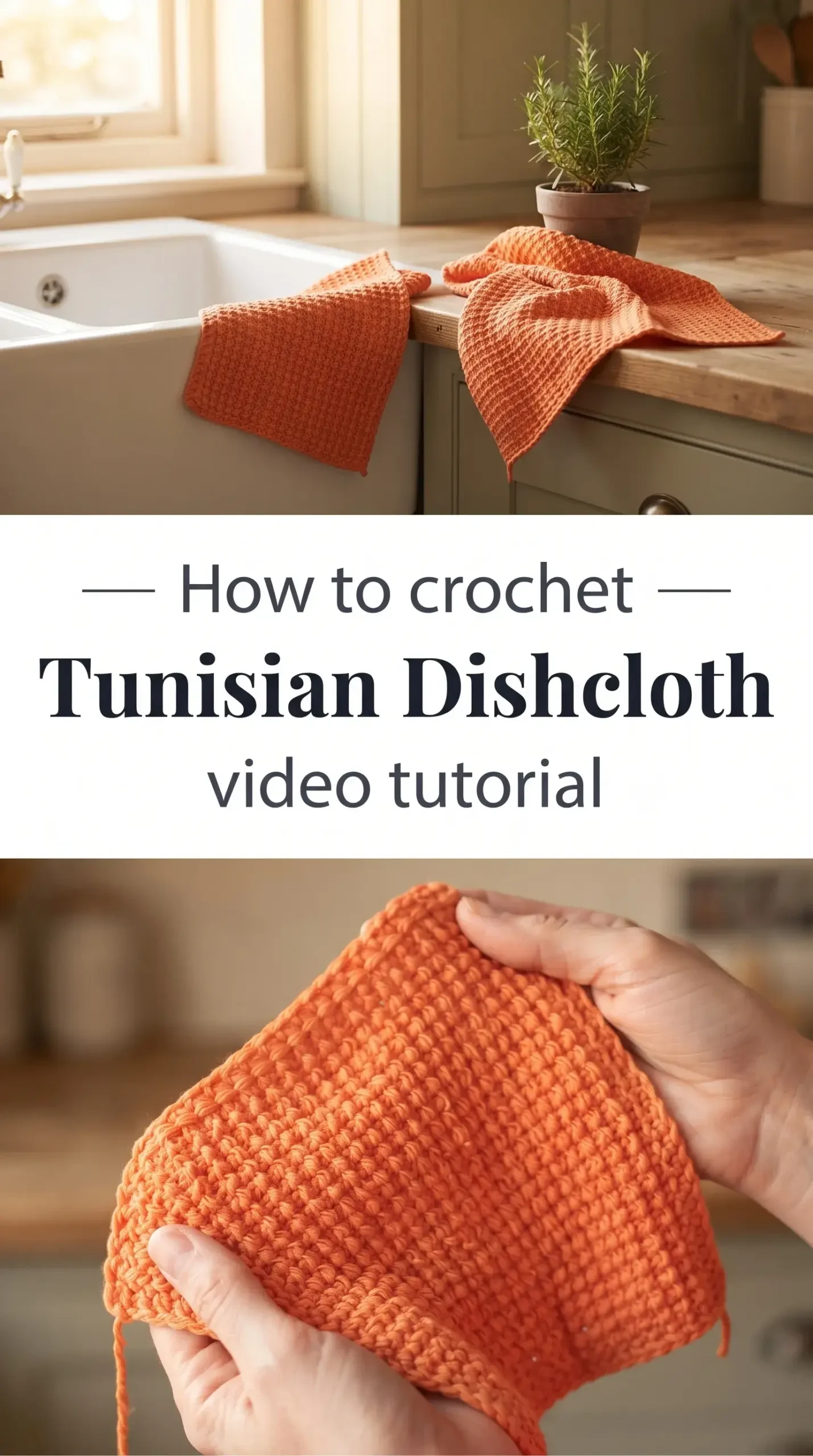
The Tunisian Dishcloth
A Crochet Tunisian Dishcloth occupies a rare and lovely space in handmade life, sitting somewhere between functional object and small work of art. The Tunisian simple stitch creates a fabric that is airy yet structured, with a subtle woven texture that looks far more complex than the meditative rhythm required to make it. It suits anyone who wants to add a handmade touch to daily rituals without committing to a large or demanding project. Whether you are new to Tunisian crochet or returning to it after a long pause, this piece welcomes you with open arms.
Tunisian Dishcloth Related Posts:
- Crochet Star Stitch Phone Bag: A Chic Everyday Accessory
- Crochet Drawstring Pouch: A Charming Everyday Accessory
- Crochet Chunky Blanket: A Cozy Must-Have Essential
- Crochet Bonnet with Bow: A Charming Winter Accessory
Burnt orange is a natural first choice here, evoking terracotta pots and autumn market tables, but a soft sage green or creamy ecru would bring an equally appealing quietness to the kitchen. The beauty of a Crochet Tunisian Dishcloth is how freely it moves between aesthetics, fitting a farmhouse kitchen as easily as a modern minimal one. Stack two or three in toning shades by the sink and they become part of the room’s story.
Materials and Tools
For a Crochet Tunisian Dishcloth with real scrubbing power and lasting shape, reach for a worsted weight cotton yarn, which gives the fabric its satisfying density and makes it fully machine washable over time. A 5mm Tunisian crochet hook is the ideal companion here, specifically one with a cable or long shaft extension, since Tunisian work holds all active loops on the hook simultaneously and requires that extra length. Cotton fibers absorb moisture brilliantly without stretching out of shape, making them far more practical than acrylic for kitchen use. A blunt tapestry needle will help you weave in your starting and finishing tails with care once the cloth is complete.
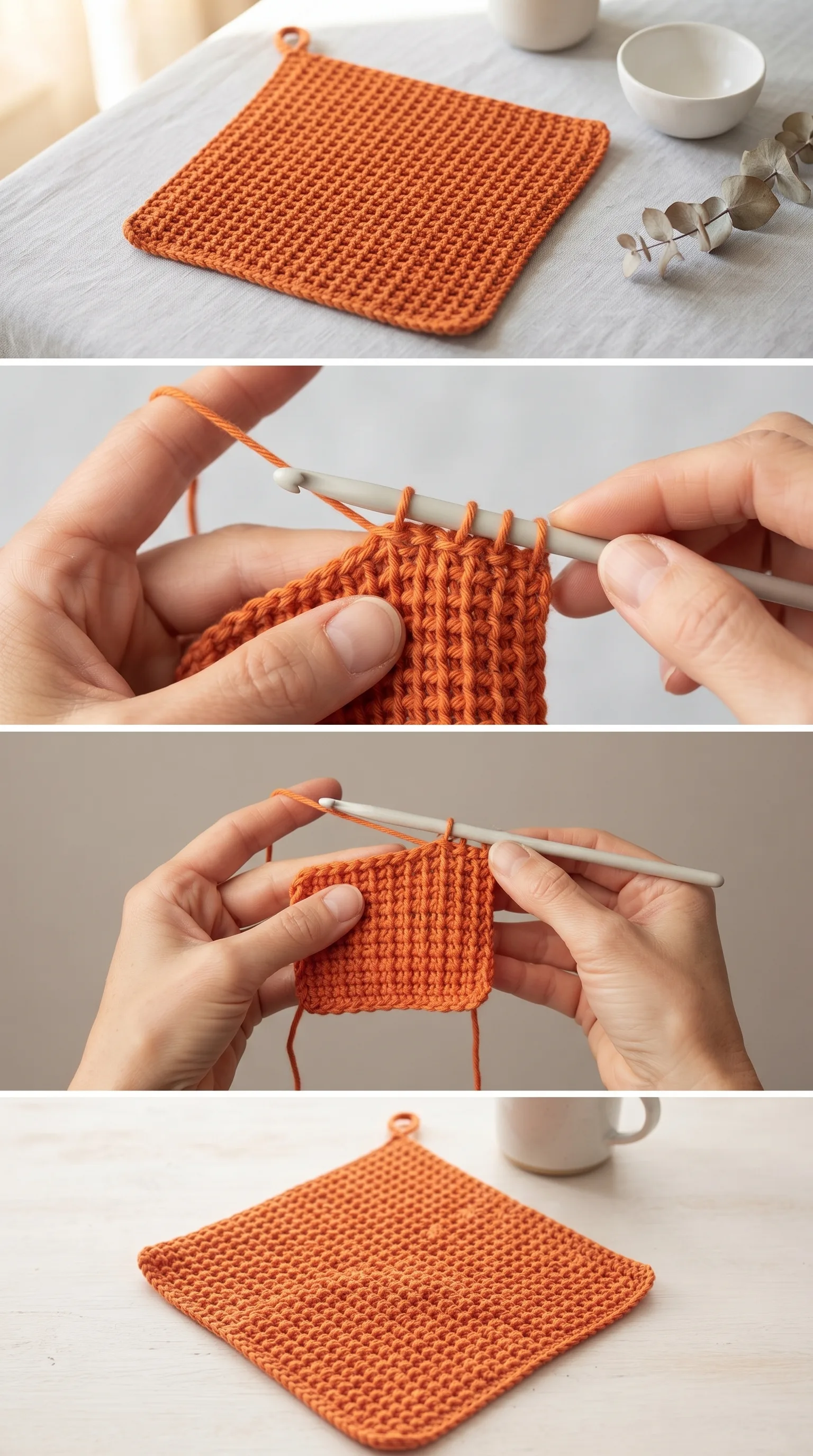
Stitch by Stitch
This pattern draws on a small and friendly collection of Tunisian techniques that build confidence as you go.
BULLET:Tss (Tunisian Simple Stitch) The foundational stitch of this cloth, worked by inserting the hook into the vertical bar of the previous row and drawing up a loop without pulling through.
BULLET:Tss Return Pass The second half of every Tunisian row, where you YO and pull through loops two at a time back across the hook to complete each stitch.
BULLET:SC (Single Crochet) Used at the border edges to create a clean, stable frame around the finished cloth.
BULLET:Ch (Chain) The starting foundation chain that determines the width of your dishcloth before the first forward pass begins.
Once you find the forward and return pass rhythm of Tunisian work, your hands begin to move almost without thinking, and that quiet repetition becomes one of the most genuinely restful parts of the craft.
Construction
The Crochet Tunisian Dishcloth is worked flat in one continuous piece from bottom to top, beginning with a foundation chain and building upward through alternating forward and return passes. Because Tunisian crochet naturally pulls fabric into a slight curl, working a simple SC border around all four edges at the finish brings everything flat and neat without any blocking drama. Beginners will find the square format forgiving since there is no shaping, no increases, and no decreases required in the main body. If you want a larger cloth for heavier kitchen tasks, simply add more chains to your starting row and work additional rows to match the proportions.
Wearing Your Tunisian Dishcloth
Keep one folded over the handle of your oven door as a small daily luxury, or lay one flat beside a handmade soap dish to complete a slow-living bathroom shelf arrangement. A set of three in graduated sizes makes a genuinely thoughtful handmade gift, tucked into a linen bag with a bar of natural soap. Every time you reach for your finished Crochet Tunisian Dishcloth, there is a small, private pleasure in knowing you made it yourself.
Washing and Caring for Your Tunisian Dishcloth
Cotton Tunisian dishcloths are wonderfully practical when it comes to care, as they can be machine washed on a gentle cycle with cool water and laid flat to dry to preserve their square shape. Avoid high heat in the dryer, since even natural cotton can shrink unevenly with repeated intense heat cycles. If your cloth develops any slight stiffness after washing, a short soak in cool water followed by gentle reshaping by hand will refresh it completely. Store folded cloths in a dry place away from prolonged damp, particularly if you are keeping a small stack in a kitchen drawer.
Every time your hands complete a forward pass and return across that warm cotton, you are practicing something that generations of makers have found deeply worthwhile. Save this to your Pinterest boards and share your finished Crochet Tunisian Dishcloth with the handmade community so others can find their own slow-stitching moment too.
Follow us on Pinterest and subscribe to the Newsletter so you don’t miss a thing!
Tutorial and photos of this tunisian dishcloth by: Jayda InStitches.