
A Crochet Corner Square is built from the centre outward, round by round, with an open lace base and a structured solid border that frames it like a picture. From granny blankets to boho cushion covers, tote bag panels to wall hangings, this one versatile motif opens up an entire wardrobe of handmade possibilities.
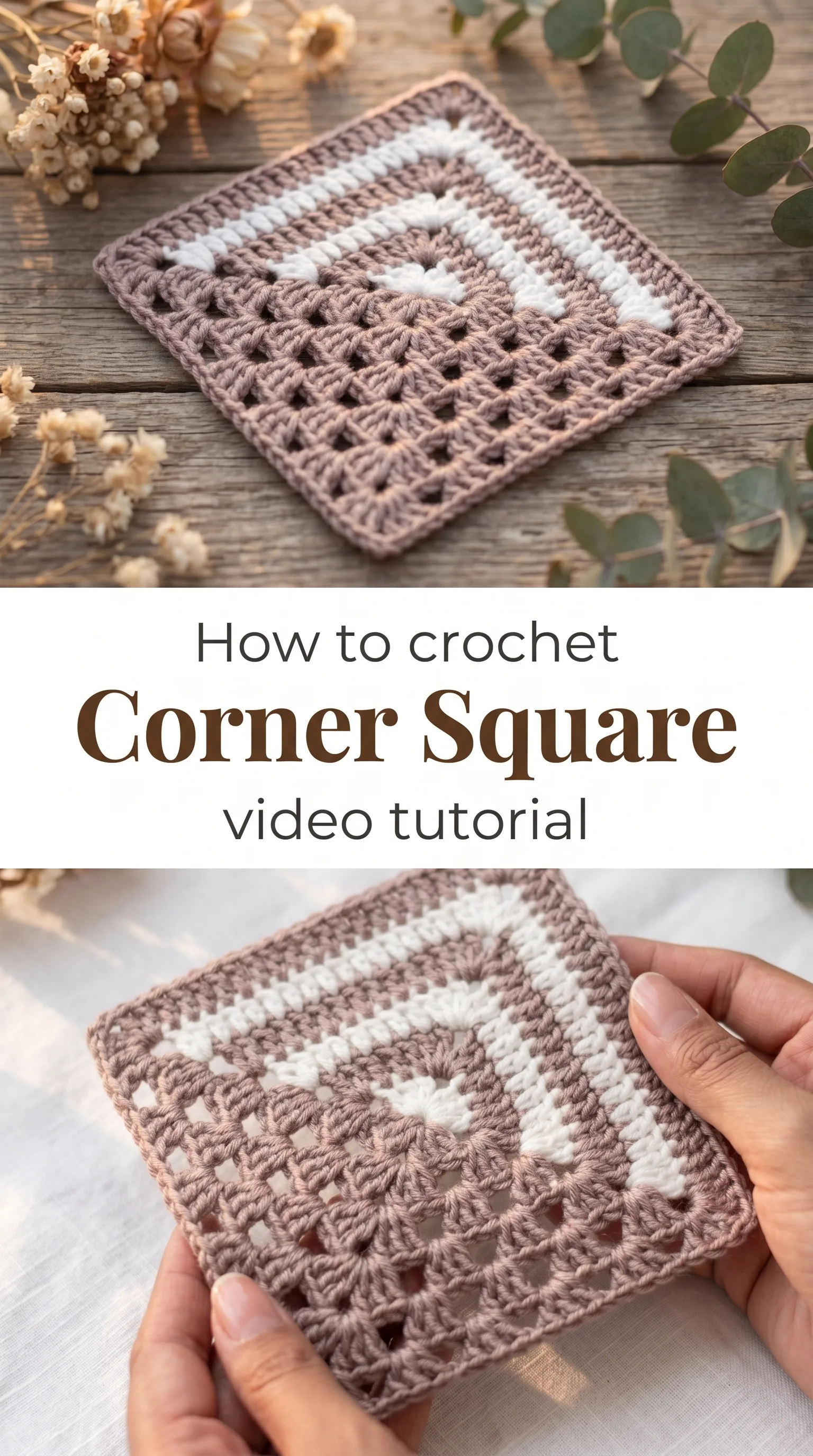
The Corner Square
The Crochet Corner Square carries the kind of quiet confidence that only comes from a design that has earned its place across generations of handmade culture. It is airy yet structured, with a lacy open centre worked in dusty rose cotton that gradually transitions into a crisp white accent round, then settles back into a firm, tightly worked border. The finished motif sits flat in the hand with satisfying weight, its geometric symmetry radiating outward from a central cluster with the precision of something both planned and organic. Whether you are a crafter picking up a hook for the second time or someone who has worked hundreds of granny squares, this design meets you exactly where you are.
Corner Square Related Posts:
- Crochet Hook Organizer: A Practical Crafter’s Companion
- Crochet Bubble Flower Charm: A Cheerful Handmade Accent
- Crochet Perfect Fit Hat: A Timeless Winter Essential
- Crochet Minion Plush: A Playful Cuddly Companion
The warm taupe and white combination visible in the reference images is a masterclass in understated palette curation, soft enough for nursery blankets yet polished enough for a structured market bag. You could just as easily reach for sage and cream, terracotta and ivory, or a deep charcoal paired with a blush pink for something a little more contemporary. The Crochet Corner Square is the kind of motif that absorbs colour beautifully, letting the stitch architecture do the talking no matter what shade you choose.
Materials and Tools
For a motif this detailed and open, a DK weight cotton yarn is the ideal companion, giving each DC cluster enough definition to hold its shape while keeping the lace sections light and readable. The squares shown in the tutorial are worked in a smooth, mercerised cotton in taupe and white, and that fibre choice is worth honouring because cotton has virtually no stretch, which means your corners stay crisp and your rounds stay round. A 3.5mm crochet hook is the right tool for DK cotton at this tension, keeping stitches snug without closing up the decorative openings in the lower rounds. Pick up a locking stitch marker to track your round beginnings, and a blunt-tipped yarn needle for weaving in the colour-change ends cleanly.
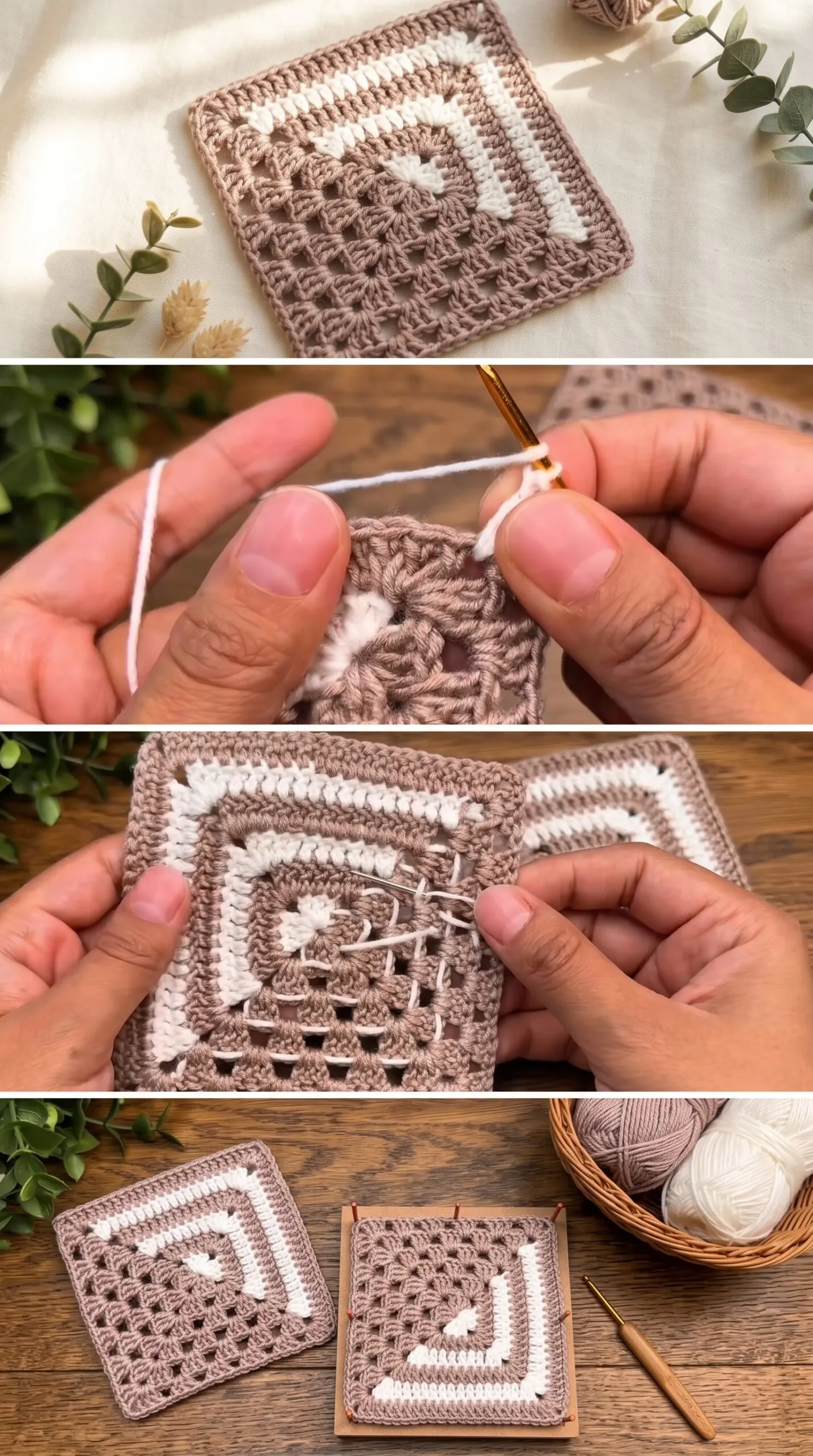
Stitch by Stitch
This motif draws on a small but expressive vocabulary of stitches that work together to create its layered, architectural look.
BULLET:SC (Single Crochet) The SC appears in the border rounds, locking stitches into a tight, even frame that defines the square’s outer edge.
BULLET:DC (Double Crochet) The DC is the primary building block of the lace centre, worked in cluster groups that fan outward from the magic ring.
BULLET:CH (Chain) Chain spaces create the airy gaps between DC clusters in the lower rounds, giving the motif its open, filigree quality.
BULLET:SL ST (Slip Stitch) The SL ST is used to join rounds seamlessly and to travel across stitches without adding height when changing colour positions.
Once you find the rhythm of cluster, chain, cluster, the rounds begin to feel genuinely meditative, the kind of repetitive work that clears the mind while the hands stay beautifully occupied.
Construction
The Crochet Corner Square is worked entirely in the round, starting from a magic ring at the centre and growing outward through approximately seven to nine rounds depending on your preferred finished size. The lower rounds are lace-dominant, with DC fan clusters separated by CH-2 spaces, while the upper rounds shift to denser solid work and introduce the contrasting white yarn for two accent rounds that give the motif its distinctive striped frame. The border is finished in the main taupe colour with SC worked tightly around all four sides, which pulls the shape square and gives the edges a professional, polished finish. To customise the size, simply add or remove rounds before beginning the border, keeping increases at each of the four corner positions to maintain the flat, square shape.
Wearing Your Corner Square
A single finished Crochet Corner Square makes a beautiful coaster or mug rug on a coffee table, styled against linen and dried botanicals for that slow-living aesthetic that photographs so well. Work four squares and seam them together for a cushion cover front that pairs with a plain backed pillow, or make twelve and join them into a lightweight lap blanket that drapes across an armchair like something from a slow Sunday morning. The more squares you finish, the more the vision grows, and suddenly what started as a single motif becomes something you cannot stop adding to.
Blocking and Caring for Your Corner Squares
Cotton motifs like this one respond beautifully to wet blocking, which is the single best thing you can do to even out tension and sharpen the lace openings in the lower rounds. Soak each finished square in cool water for ten to fifteen minutes, gently squeeze out the excess without wringing, and pin it to a blocking mat at the corners and along each side before leaving it to dry completely. Once blocked and dry, your squares will hold their shape through gentle machine washing on a cool, delicate cycle, though hand washing is always the kinder option for anything with intricate stitch detail. Store your finished project folded flat in a breathable cotton bag to keep the fibre fresh and the shape intact between uses.
Every Crochet Corner Square you finish is a small, complete act of making, proof that beautiful things are built one round at a time. The full video tutorial from Knitting Time walks you through every round with warmth and clarity, so cast on that magic ring and let the pattern begin. If you make one, share it on Pinterest and tag your project so other makers can find the pattern too.
Follow us on Pinterest and subscribe to the Newsletter so you don’t miss a thing!
Tutorial and photos of this corner square by: Knitting time🧶by Dina.